
Last updated October 15, 2026
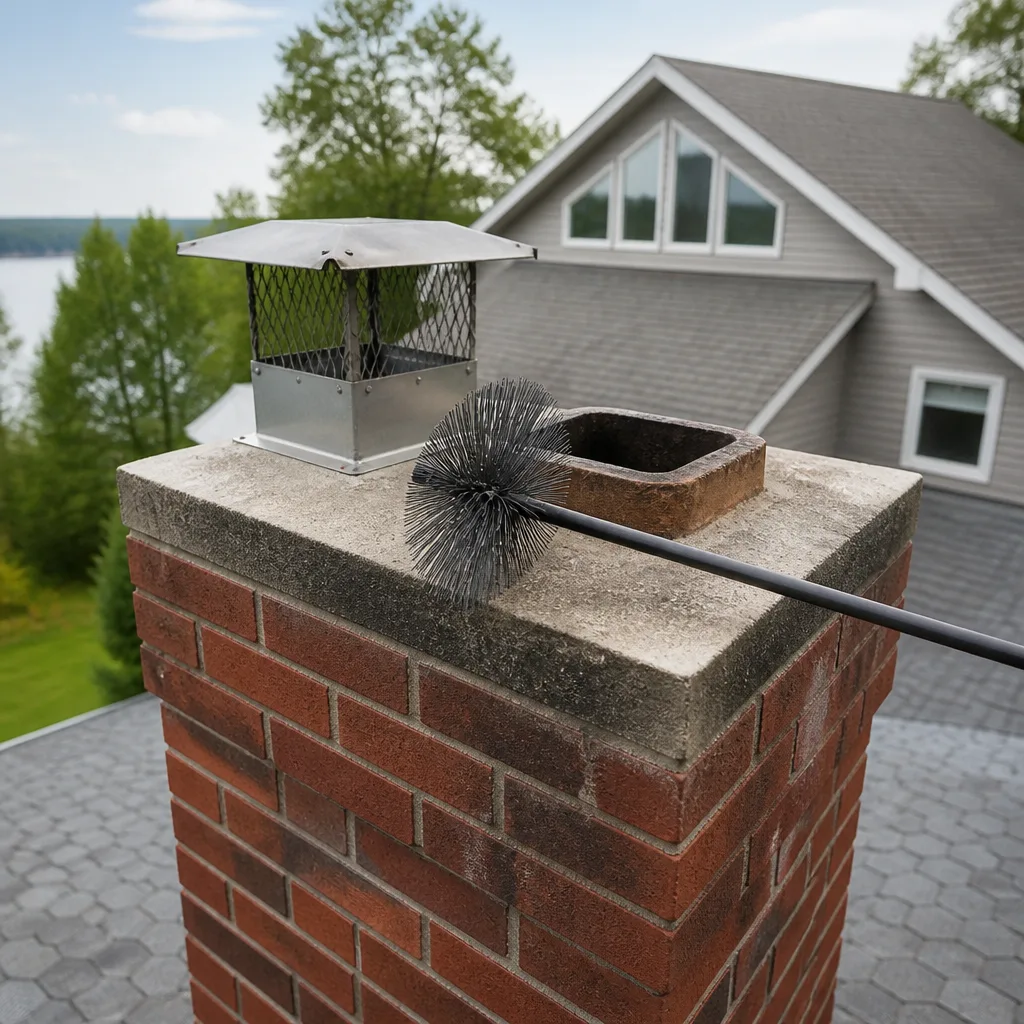 Sweep & inspection
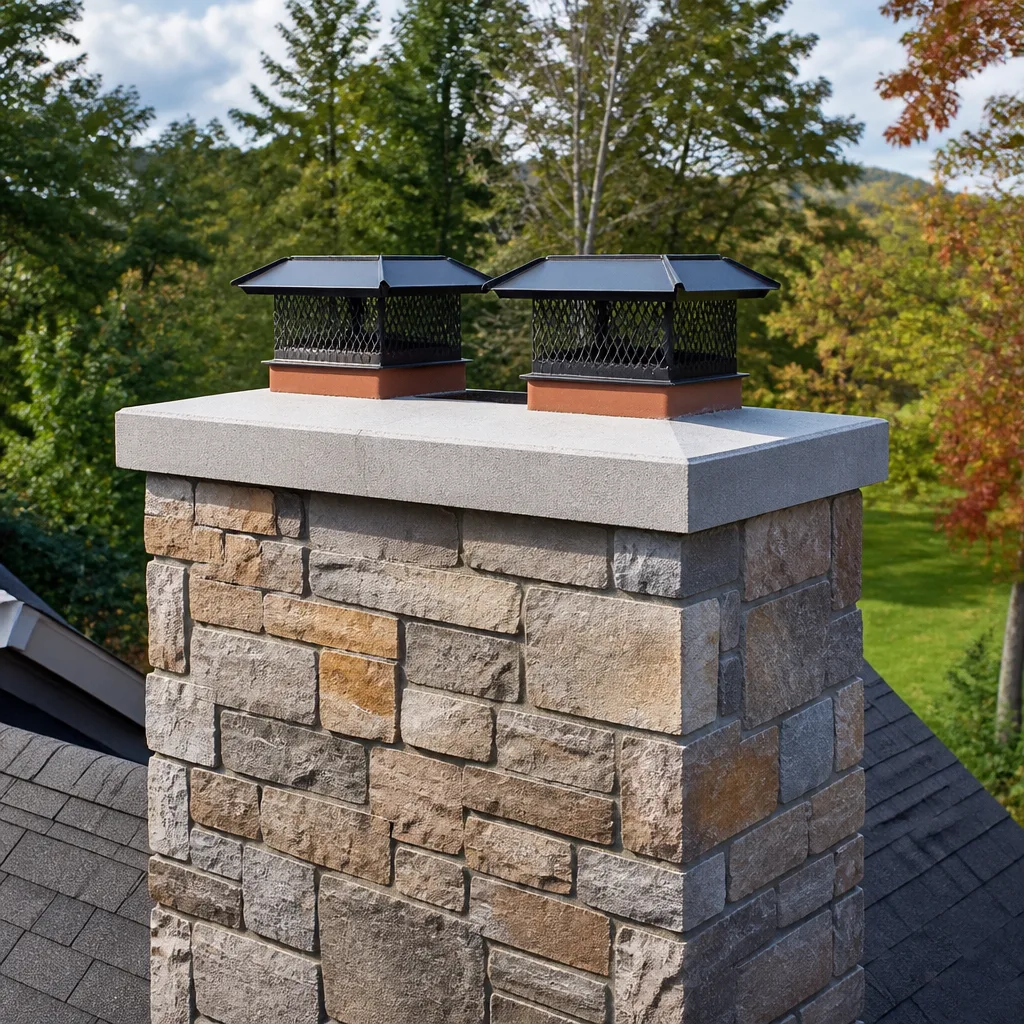 Caps & crowns
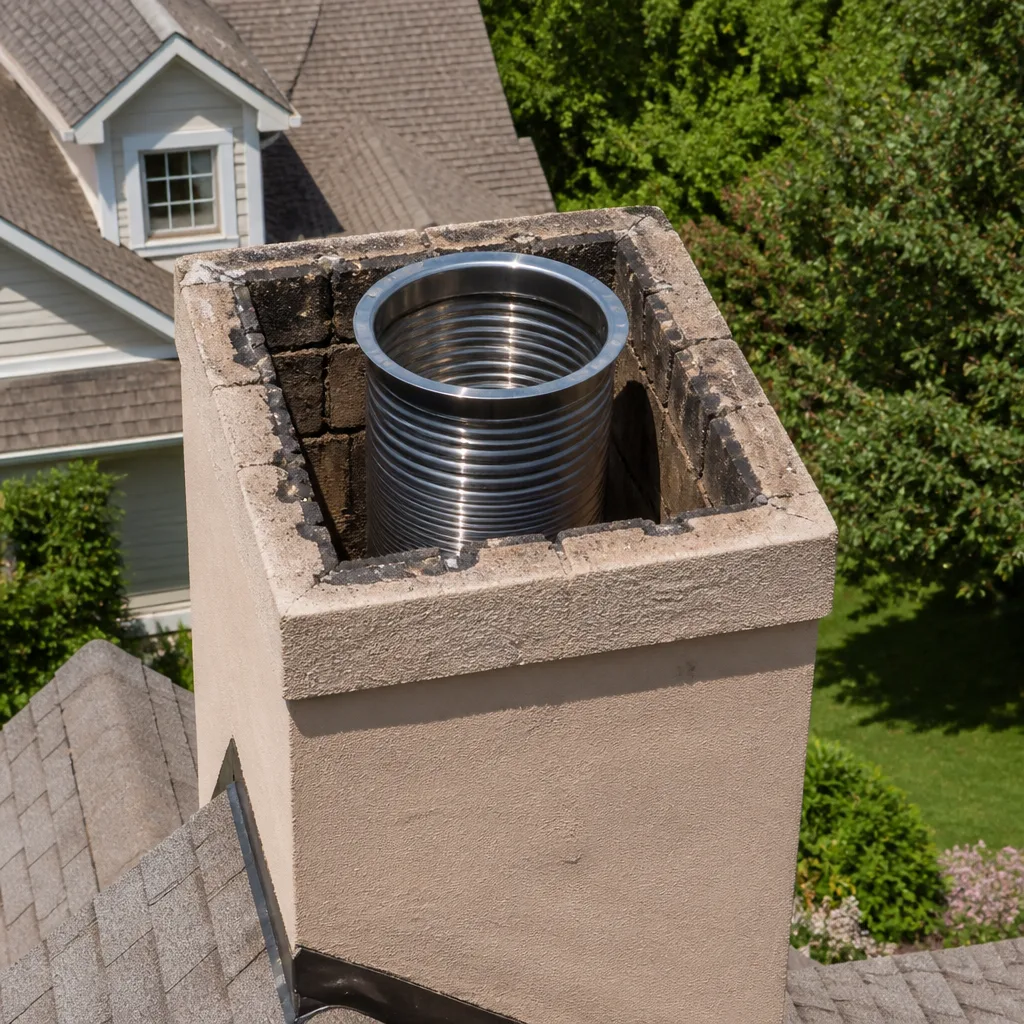 Flue relining
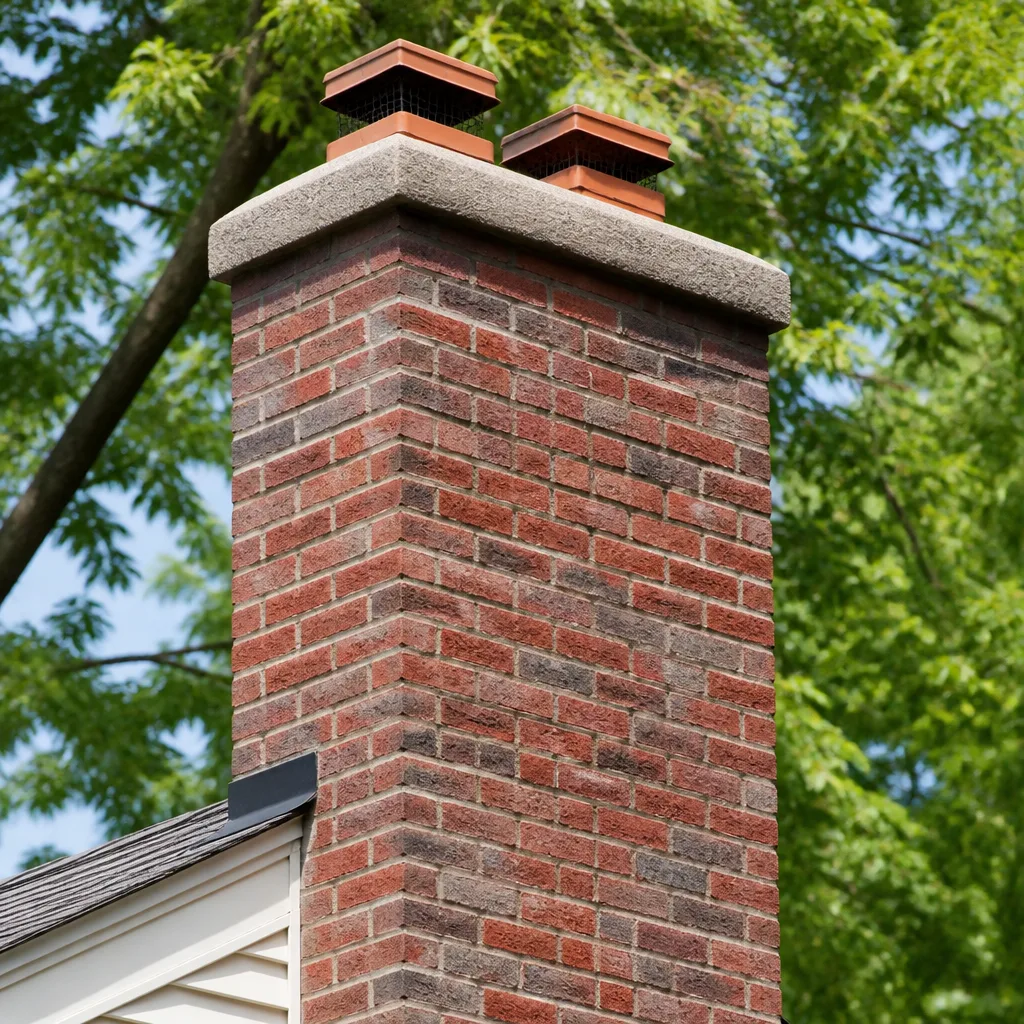 Masonry repair
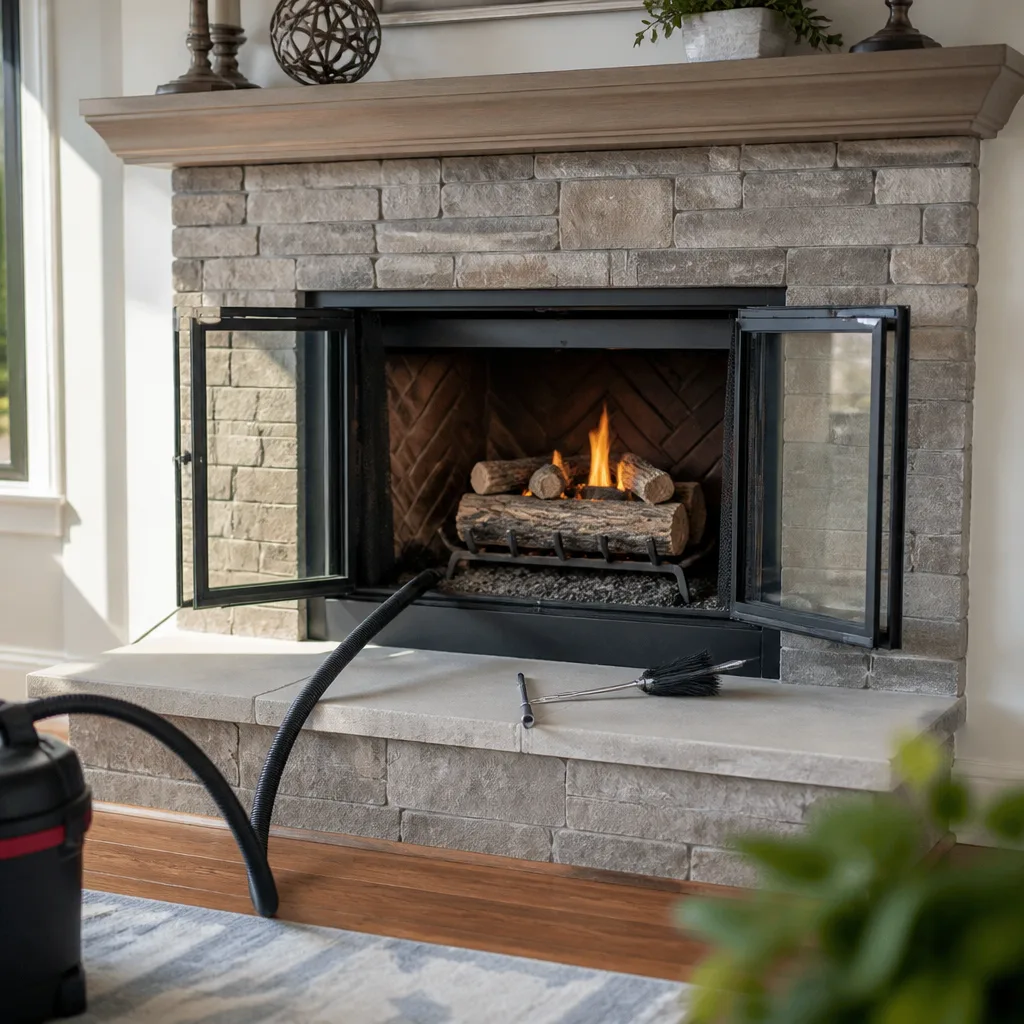 Gas fireplace service
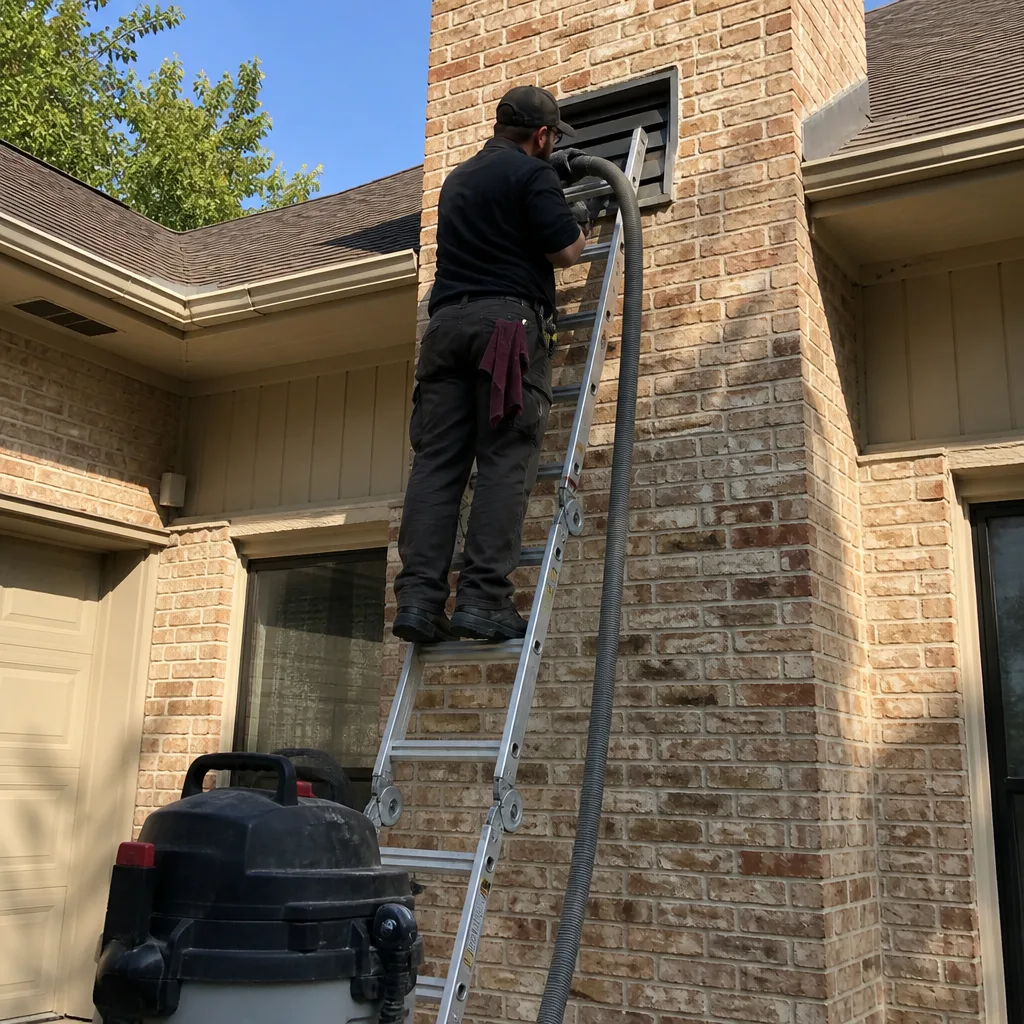
Level 1 sweep and inspection to the NFPA 211 annual standard - flue, crown, cap, and flashing checked and photographed
Chimney sweep logs do not sweep chimneys. They loosen some creosote - which then falls where a brush and vacuum still have to collect it.
DIY vs Professional Chimney Cleaning: The Dallas Homeowner’s Decision Guide
Most Dallas homeowners don’t realize that the thin layer of black dust they see on their fireplace walls is only about ten percent of what’s actually in the flue. The other ninety percent is coating the liner above the damper, packed into the smoke shelf, and caked onto the smoke chamber walls where the flue narrows. A hardware store brush will knock loose some of the surface soot down low, but it won’t touch most of what’s up there, and it won’t tell you whether last spring’s hailstorm cracked a flue tile. This guide walks through exactly what DIY cleaning removes, what it leaves behind, what that gap costs a Dallas homeowner, and how to decide which route fits your fireplace and your season.
Styles & brands we work with
Quick Answer
DIY chimney cleaning is reasonable for Dallas homeowners with gas fireplaces used lightly or wood fireplaces that went completely unused for a full season and show no visible damage, but it is not a substitute for professional cleaning on any wood-burning chimney in regular use. A professional sweep removes creosote from the full flue length and includes a written inspection that catches cracks, gaps, and blockages a brush kit will never reveal. Most Dallas chimney sweeps run between $180 and $300, and that includes the diagnostic report that a $40 brush kit cannot provide. You can clean light soot yourself between professional visits; you cannot inspect a flue liner with a flashlight and wishful thinking.
Table of Contents
- What DIY Cleaning Actually Removes (and What It Leaves Behind)
- The Real Cost Math: DIY vs Professional in Dallas
- When DIY Makes Sense in Dallas
- When Professional Cleaning Is Non-Negotiable
- How to Do a Safe Visual Check Between Professional Sweeps
- What a Professional Sweep in Dallas Actually Includes
- What Actually Happens If You Skip It
- Common Mistakes to Avoid
- When to Call a Professional
- Frequently Asked Questions
- The Bottom Line
What DIY Cleaning Actually Removes (and What It Leaves Behind)
A DIY chimney cleaning kit removes loose soot from the firebox and the first few feet of the flue. That’s the honest truth of it. The brush reaches what you can see and a little of what you can’t, and on a fireplace that hasn’t been used much, that might be enough to keep things safe for one more season. But soot and creosote are not the same substance, and the difference is where the DIY conversation actually lives.
Soot is soft, black, and powdery. It brushes off with a nylon or wire brush and it’s what most homeowners picture when they think about chimney cleaning. Creosote is different. Creosote is the sticky, tar-like residue that forms when wood smoke condenses inside the flue before it exits the chimney. It builds up in three stages: the first is flaky and brushable, the second is a hardened glaze that takes chemical treatment or a rotary tool to break loose, and the third is a thick, shiny tar layer that is actively flammable at high temperatures. A hardware store brush will handle stage one. It will skip stages two and three, which are the stages that actually cause chimney fires.
Here’s what a $40 brush kit removes:
- Loose soot in the firebox and the visible lower flue
- Light stage-one creosote that hasn’t hardened onto the liner
- Ash and small debris that fell back into the firebox
Here’s what it leaves behind:
- Stage-two and stage-three creosote bonded to the liner walls
- Creosote on the smoke shelf, the flat area behind the damper where smoke drafts before exiting
- Creosote in the smoke chamber, the angled space above the damper where the flue narrows
- Any blockage from nests, leaves, or construction debris sitting higher in the flue
- Cracked flue tiles, deteriorated mortar joints, and gaps that are visible only to a professional inspection camera
- Rusted or jammed dampers that can dump carbon monoxide back into the living room
The gap between what a brush removes and what it leaves behind is where chimney fires start. In our experience across Dallas, a homeowner who calls us after a chimney fire almost always says the same thing: they thought they’d cleaned it. And in a narrow technical sense, they had. They had removed the soot they could see. They had not removed the creosote they couldn’t, and they had no way of knowing the difference until the flue got hot enough to find it for them.
We’re not saying every uncertified brush job leads to a fire. Most don’t. The point is that DIY cleaning is a surface procedure on a system where the real failures happen out of sight. That’s the diagnostic gap, and it’s worth naming plainly.
The Real Cost Math: DIY vs Professional in Dallas
Let’s put numbers on it, because that’s the thing most guides dance around and it’s the thing Dallas homeowners actually want.
A DIY chimney cleaning setup costs about $40 to $70 for a basic brush kit with rods. Add drop cloths, a shop-vac filter you don’t mind ruining, safety goggles, a dust mask, and a few hours of your time. If you’ve never done it before, figure three to four hours. If the brush gets stuck or the rod comes apart inside the flue, which happens more often than manufacturers admit, you’ll pay a professional to come retrieve it, and that retrieval call runs higher than a standard sweep because it’s a rescue, not a routine visit.
A professional chimney sweep in Dallas typically runs between $180 and $300 for a standard masonry fireplace with one flue. That includes the full cleaning, the inspection report, and a set of eyes on every part of the system a homeowner never sees. If you burn wood regularly, you’ll do that once a year. That’s $15 to $25 a month to know the liner hasn’t cracked and the creosote hasn’t reached stage three.
| Approach | Materials Cost | Time Cost | Diagnostic Value | Risk Cost if a Defect Is Missed |
|---|---|---|---|---|
| DIY brush kit | $40 to $70 | 3 to 4 hours first time; 2 hours after | None beyond what you can see | Chimney fire runs $8,000 to $25,000 in structural damage in Dallas homes; liner replacement runs $2,500 to $7,000 |
| Professional sweep with inspection | $180 to $300 in Dallas | 1 to 2 hours at your home | Full written report with photos or video of the flue interior | Included; sweep identifies defects before they fail |
The cost comparison isn’t $40 versus $200. It’s $40 plus a few hours of labor plus the cost of whatever you didn’t know was wrong. A cracked flue tile that goes undetected for one winter becomes a liner replacement. A liner replacement that keeps getting deferred becomes a chimney fire. That math is predictable, and it’s the same math we see play out across Dallas every January.
When DIY Makes Sense in Dallas
There are specific situations where a DIY cleaning is genuinely reasonable, and we’ll name them without hedging, because it doesn’t do anyone any good to pretend every chimney needs a professional every single time.
DIY is reasonable if you have a gas fireplace used rarely. Gas logs produce almost no creosote because there’s no wood smoke. What accumulates is dust, pet hair, and the occasional spider web. A homeowner can vacuum the firebox, wipe down the logs per the manufacturer’s instructions, and call it done. If the fireplace is vented and used a few times a year, an annual visual check is enough, and a professional chimney inspection in Dallas every two to three years will cover the venting system.
DIY is also reasonable if the fireplace went completely unused for a full season. No fires, no smoke, no creosote. The main risks in an idle chimney are animal nests and debris from storms, which you can often spot from the ground or by looking up the flue with a flashlight and a mirror. If you see daylight at the top, the flue is clear. If you don’t, call someone. A fireplace repair in Dallas for a blockage costs less than a house fire.
And DIY makes sense as a light between-sweeps touch-up for wood burners who want to keep the firebox clean mid-season. If you had a professional cleaning in October and you’ve been burning on weekends through December, you can brush the loose soot out of the firebox yourself in mid-January. That’s surface work, and it’s fine. It doesn’t replace your annual professional sweep; it just keeps the firebox presentable between visits.
The pattern here: DIY works when there’s nothing serious to remove and nothing structural to assess. Gas, idle, or recently cleaned. If you’re in any other situation, keep reading.
When Professional Cleaning Is Non-Negotiable
There are three Dallas scenarios where the DIY question shouldn’t even be a question. Here they are in plain terms.
First: any wood-burning fireplace used regularly. “Regularly” means once a week or more during burn season, which in Dallas runs from about October through March. That level of use produces stage-one creosote within the first month and stage-two creosote by midwinter in a typical masonry flue. No brush kit at Home Depot removes hardened stage-two creosote. You need rotary cleaning with a chain loop or chemical treatment followed by a sweep, and that means professional equipment and a professional operator. We see the difference every season: a flue that was DIY-brushed in October and burned on all winter will show glaze creosote by February, and glaze creosote lights at 2,000 degrees. That’s the chimney fire threshold, and it’s not theoretical.
Second: any chimney that hasn’t been inspected in over two years. This applies even if the fireplace has been used lightly or not at all. Dallas weather does real work on chimney exteriors. Freeze-thaw cycles crack mortar joints. Spring hailstorms chip brick and damage crowns. The North Texas summer bakes the exterior masonry, and the winter cold shrinks it. A chimney that was fine in 2023 may have a cracked flue tile in 2025, and you will not see that crack from the firebox. A professional camera inspection will. Two years is the outside limit before unseen damage becomes a structural liability.
Third: any post-storm assessment. After a Dallas hailstorm or a high-wind event, the chimney is one of the most exposed parts of the house. Hail chips brick and crown mortar. Wind lifts flashing. Debris clogs caps. If you’ve had roof damage, assume the chimney took some of it too, and get a professional to look before you light the first fire of the season. The cost of the inspection is a fraction of the cost of a chase leak or a collapsed crown.
Professional cleaning is also non-negotiable if you smell smoke inside the house after the fire is lit, if you see white staining on the exterior brick (that’s moisture working through the masonry), if you hear animals in the flue, or if you bought the house and have no record of the chimney’s history. Each of those is a signal that something above the firebox needs eyes on it, and eyes are the one thing a DIY kit can’t provide.
How to Do a Safe Visual Check Between Professional Sweeps
Between professional visits, there’s real value in a homeowner visual check. What you’re looking for is obvious damage and early warning signs, not creosote levels, because creosote assessment is a professional task. Think of this as a two-minute monthly habit during burn season.
Here’s a step-by-step visual check you can do safely without climbing onto the roof:
- Look up the flue with a flashlight and a hand mirror. Open the damper and shine the light up. You’re checking for three things: daylight at the top, blockages (nests, leaves, construction debris), and any flue tiles that look shifted or out of line. If you see anything other than a straight, clear path to daylight, note it for the professional.
- Check the firebox walls for cracks. Look for hairline cracks in the brick or paneling, gaps at the mortar joints, and any brick that moves when you press on it. A firebox crack is a carbon monoxide risk, not just a cosmetic issue.
- Examine the damper. It should open and close smoothly and seat fully in both positions. A damper that sticks open will drain heated air all winter. A damper that sticks closed will smoke your living room. Either way, note it.
- Walk outside and look at the chimney from the ground. Check the brick or stone for white staining, cracked mortar, missing crown pieces, and anything that looks like moisture working through the masonry. Also look at the flashing where the chimney meets the roof for lifted edges or rust.
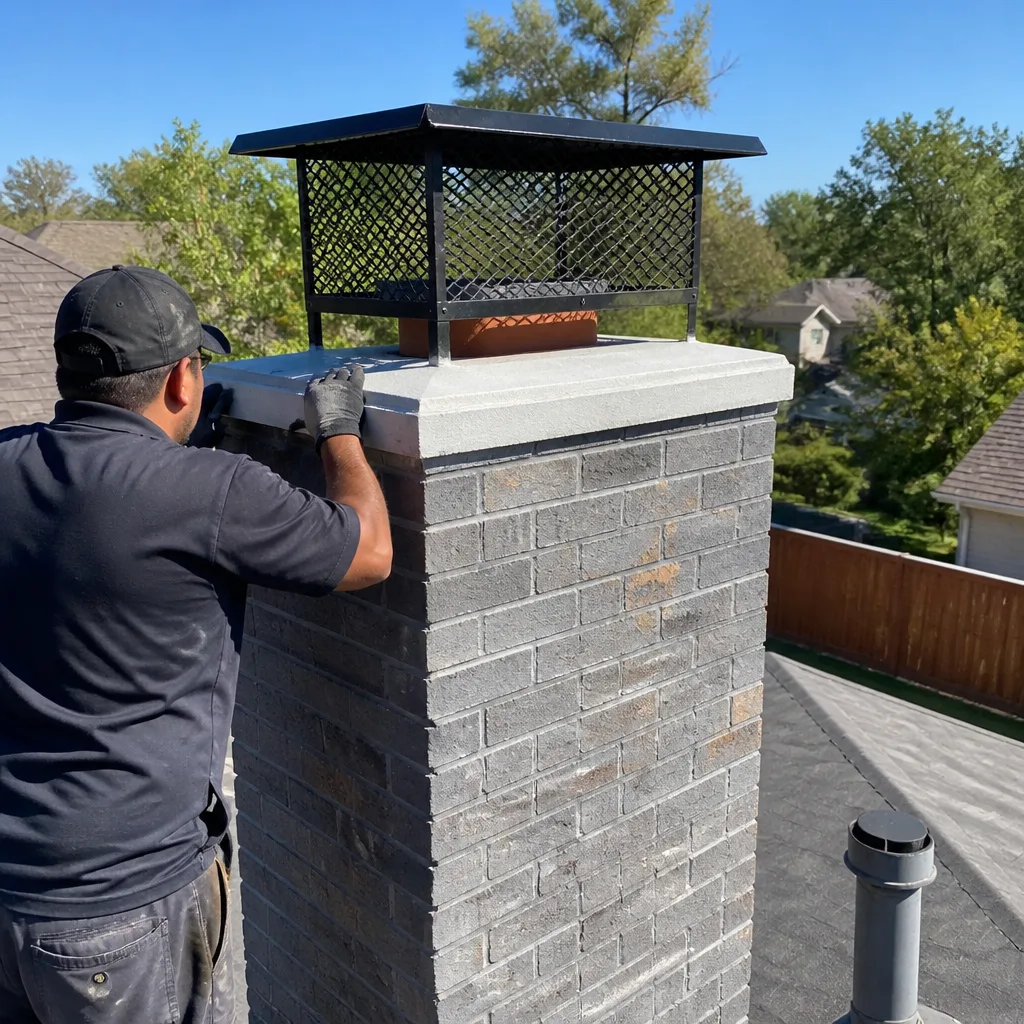
- Check the cap and spark arrestor if you can see them from the ground. The cap should be seated straight and the mesh should be intact. A missing or busted cap lets rain, birds, and squirrels in, and a Dallas squirrel will happily spend the winter in your flue.
- After a storm, repeat steps 4 and 5. That’s when damage happens, and catching it early is what keeps a $200 issue from becoming a $7,000 rebuild.
Document everything you find. A phone photo with the date is enough. When the professional arrives, hand off your notes and photos. That saves time and makes sure nothing you spotted in August gets skipped in October. A professional who sees your documented observations can target specific areas rather than starting cold, and that’s the kind of homeowner-and-sweep partnership that keeps a chimney safe for years.
What a Professional Sweep in Dallas Actually Includes
Since 2002, the standard for what a professional chimney cleaning should include hasn’t changed much, and it’s worth spelling out so you know what to expect when you book one. If a company quotes a price without describing any of this, ask questions.
A professional chimney cleaning in Dallas should include, at minimum:
- Full flue cleaning. The entire length of the liner from the firebox to the cap, using a brush sized to your flue dimensions, wire or poly depending on the liner material. This removes stage-one and stage-two creosote, and with rotary equipment, a good portion of stage-three.
- Firebox and smoke shelf cleaning. The firebox gets brushed and vacuumed, and the smoke shelf gets cleaned, which is the area behind the damper that fills with soot and creosote and is nearly impossible for a homeowner to reach.
- Smoke chamber evaluation. The angled area above the damper is the most common site for compromised mortar in Dallas masonry chimneys, and a professional will look at it during the cleaning even if they can’t fully reach it without a specialty tool.
- Visual and camera inspection of the flue liner. This is the diagnostic part that makes the whole visit worth it. The sweep runs a camera up the flue and shows you the condition of the tiles or metal liner. You see what they see, and you get a written report.
- Damper and cap check. The sweep confirms the damper opens, closes, and seats properly, and checks the cap and spark arrestor for damage.
- Written report. Every professional sweep ends with documentation. If your sweep hands you a verbal summary and heads to the truck, that’s not a full service in our book. The written report is the record that protects you later, whether it’s for insurance, a home sale, or a warranty claim.
We do all of this on every chimney sweep in Dallas we perform, and the written price comes before the work starts, not after the brush comes out. The report is the product as much as the cleaning is. A clean flue you haven’t seen documented is just a clean flue. A written report tells you whether the tiles behind the soot are cracked, whether last spring’s hail chipped the crown, and whether next season is safe to burn. That’s what the money is actually for.
What Actually Happens If You Skip It
Let’s talk about the consequences without sliding into scare tactics, because you deserve to know what the risk actually is and what it actually isn’t.
The real risk of skipping chimney cleaning is creosote accumulation, and the failure it leads to is a chimney fire. Chimney fires in Dallas burn at 2,000 degrees or higher inside the flue. The fire finds the creosote, ignites it, and runs up the liner like a blowtorch. Some chimney fires announce themselves with a roar that sounds like a freight train passing through the living room. Others burn quietly, and the only evidence is the warped damper, the cracked liner, and the smoke-stained brick you find later.
In a masonry chimney, a chimney fire cracks flue tiles and destroys mortar joints. Once the flue tiles are cracked, the chimney is no longer a contained exhaust system. Gases and embers pass through the cracks into the surrounding structure, which is wood framing, which burns. That’s how a chimney fire becomes a house fire, and that’s the chain you’re preventing when you pay for a sweep.
The less dramatic but more common consequence of skipping cleaning is carbon monoxide exposure. A blocked or heavily coated flue drafts poorly. The combustion gases from your fire don’t all exit through the chimney; some back up into the living space. Carbon monoxide is odorless and invisible, and the first symptoms are headaches and dizziness that most people write off as winter flu. Every Dallas winter, the local news runs at least one story about a family hospitalized from CO exposure, and a portion of those incidents trace back to a chimney that hadn’t been cleaned or inspected.
Skipping one season probably won’t burn your house down. Skipping five seasons in a row is rolling the dice with the worst odds in the house. The point isn’t that every dirty chimney catches fire. The point is that every chimney fire involves a dirty chimney, and cleaning is the one variable in the equation you can control.
Common Mistakes to Avoid
- Assuming gas fireplaces never need service. Gas logs don’t create creosote, but the venting system still gets clogged with dust, nests, and debris. A gas fireplace that hasn’t been checked in years can vent combustion byproducts into the house. Every gas fireplace needs a professional inspection at least every couple of years.
- Burning pine and construction scraps to save money. Soft woods and treated lumber produce significantly more creosote than seasoned oak or hickory. In Dallas, the most burned wood is oak and mesquite, and that’s good. The cords of pine sold cheap on the side of I-30 are false economy; you’ll pay for it in creosote removal.
- Using liquid creosote removers instead of sweeping. The log-and-spray products you see at home improvement stores soften creosote but don’t remove it. You still need a mechanical sweep. They’re a supplement, not a substitute, and plenty of Dallas chimney fires have started in flues the homeowner thought they’d “treated.”
- Cleaning only the firebox and calling it done. The firebox is the part you see. The flue is the part that catches fire. If you only clean what’s visible, you’re doing yard work while the roof leaks.
- Hiring a chimney sweep based on price alone. The cheapest quote in Dallas will also be the quote that skips the camera inspection, skips the smoke shelf, and has no written report. A $129 “sweep” that doesn’t inspect is a dusting service. You can dust the firebox yourself for free.
- Skipping the post-storm check because the roof “looks fine.” Hail damage to a chimney crown or cap isn’t visible from the ground and doesn’t show up as a roof leak. By the time water damage appears on the ceiling, the chimney has been leaking for months. After any Dallas hailstorm, worth a call.
When to Call a Professional
If you’re burning wood regularly, it’s been more than two years since your last inspection, or you haven’t lit the fireplace since the last Dallas hailstorm punched through the metroplex, call a professional. That’s the honest threshold. If you’ve never had the chimney checked since buying the house, that also qualifies; unknown history means unknown risk.
If you smell smoke inside, hear animals in the flue, see white staining on exterior brick, or spot cracked firebox panels, call before the next fire. Each of those is a concrete signal that something above the damper needs a professional eye. Ashby Chimney Dallas offers free estimates in Dallas. Call (361) 314-3193 and we’ll give you a written price before any work starts.
Frequently Asked Questions
A standard chimney sweep in Dallas runs between $180 and $300 for a single-flue masonry fireplace. The exact price depends on the flue condition, the creosote stage, and whether any repairs come out of the inspection. At Ashby Chimney Dallas home we quote a written price before any work starts, so the invoice matches the number you agreed to. Call (361) 314-3193 for an exact quote, free of charge.
You can remove loose soot with a brush kit, but you cannot remove hardened creosote or inspect the flue liner for cracks and blockages. DIY cleaning is fine for gas fireplaces used rarely or wood fireplaces that sat unused all season. It is not a substitute for annual professional cleaning on a regularly used wood-burning fireplace.
A wood-burning chimney in regular use should be swept once a year, ideally before burn season starts in October. That’s the standard both the industry and Dallas insurance carriers expect. A gas fireplace can go two to three years between professional inspections, with a homeowner visual check each season.
Skipping one year builds up an extra season of creosote on the liner walls, which raises the chimney fire risk and reduces draft quality. Skipping several years in a row allows creosote to reach the glazed stage-three condition that lights off at high temperatures. The practical consequence is higher risk and often a more expensive cleaning when you finally do schedule one. For an honest assessment of your flue, call (361) 314-3193.
Gas fireplaces don’t produce creosote the way wood fires do, so they rarely need the same kind of cleaning. But their vents still collect dust, pet hair, and occasionally bird nests, especially in Dallas where winter isn’t cold enough to discourage nesting. A gas fireplace should have a professional inspection at least every two years to confirm the venting system is clear and the damper is functioning.
A cleaning removes soot and creosote from the flue, smoke shelf, and firebox. An inspection evaluates the condition of the liner, damper, crown, cap, and masonry for damage and safety issues. Most professional sweeps in Dallas include both in the same visit, which is why the price range is what it is: you’re paying for the cleaning and the camera inspection together. A chimney inspection in Dallas without a cleaning is useful if you’re buying a home or filing an insurance claim, but most homeowners want both at once.
The Bottom Line
The DIY chimney cleaning debate isn’t really about whether you can scrub soot off a firebox. You can. The real question is whether a brush kit tells you anything about the condition of the flue, and the answer is that it tells you nothing. In Dallas, where hailstorms punish brick and freeze-thaw cycles loosen mortar, the chimney is one of the most weather-exposed parts of the house, and the damage it takes is almost always invisible from the living room. A professional sweep gives you the cleaning and the diagnostic in one visit, with a written report you can keep and act on. If you’ve been handling it yourself for years or if you’re not sure the last sweep was thorough, call (361) 314-3193. We’ll answer the phone, give you a straight number, and put the promise in writing before a single brush goes up the flue.
Written by Nathan Corliss, Owner at Ashby Chimney Dallas, serving Dallas since 2002.
See the difference
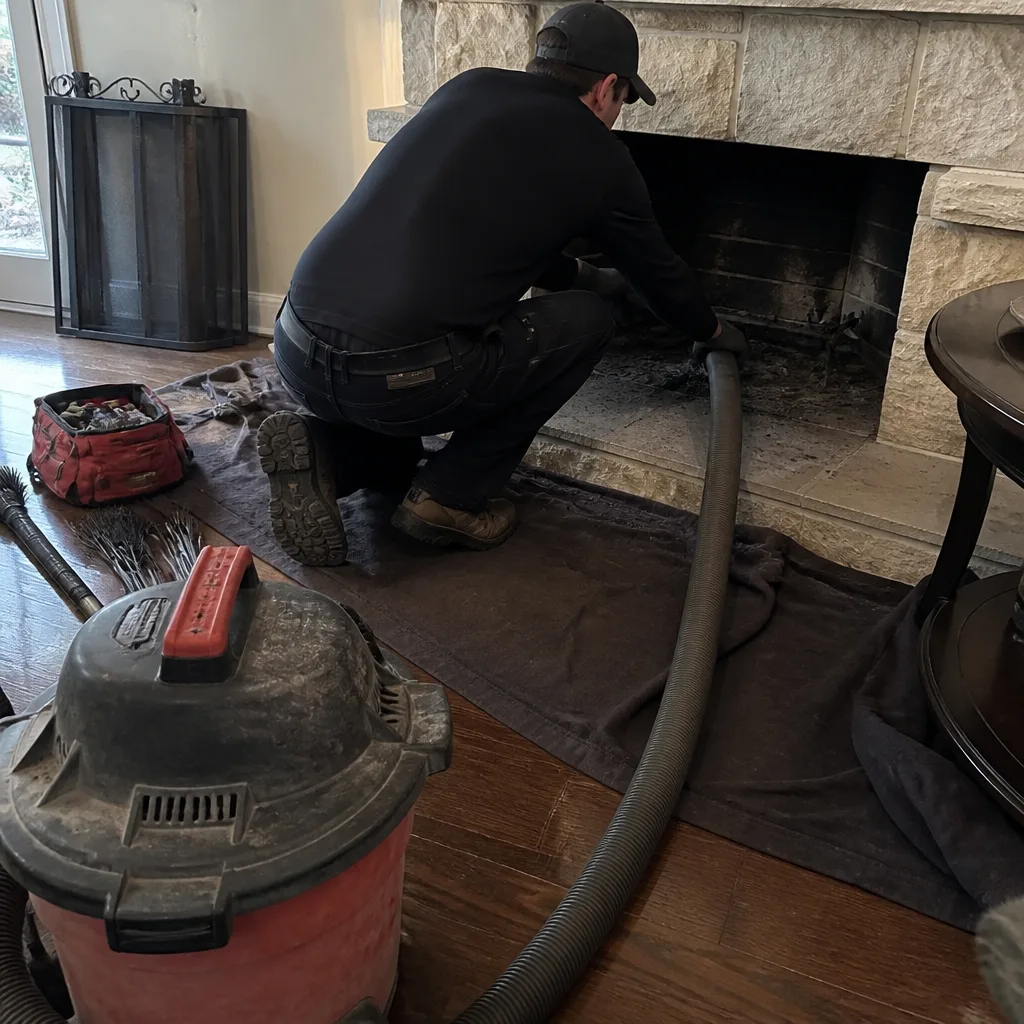 Before
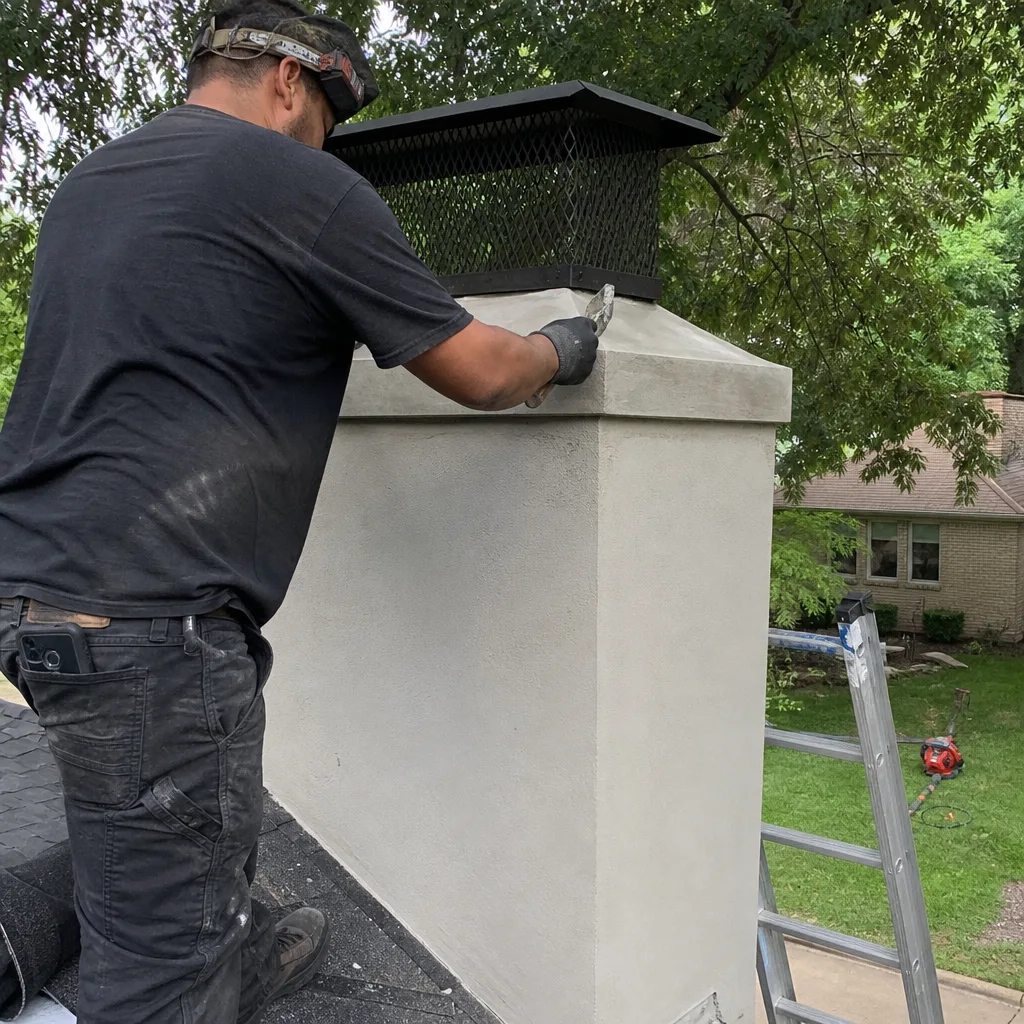 After
After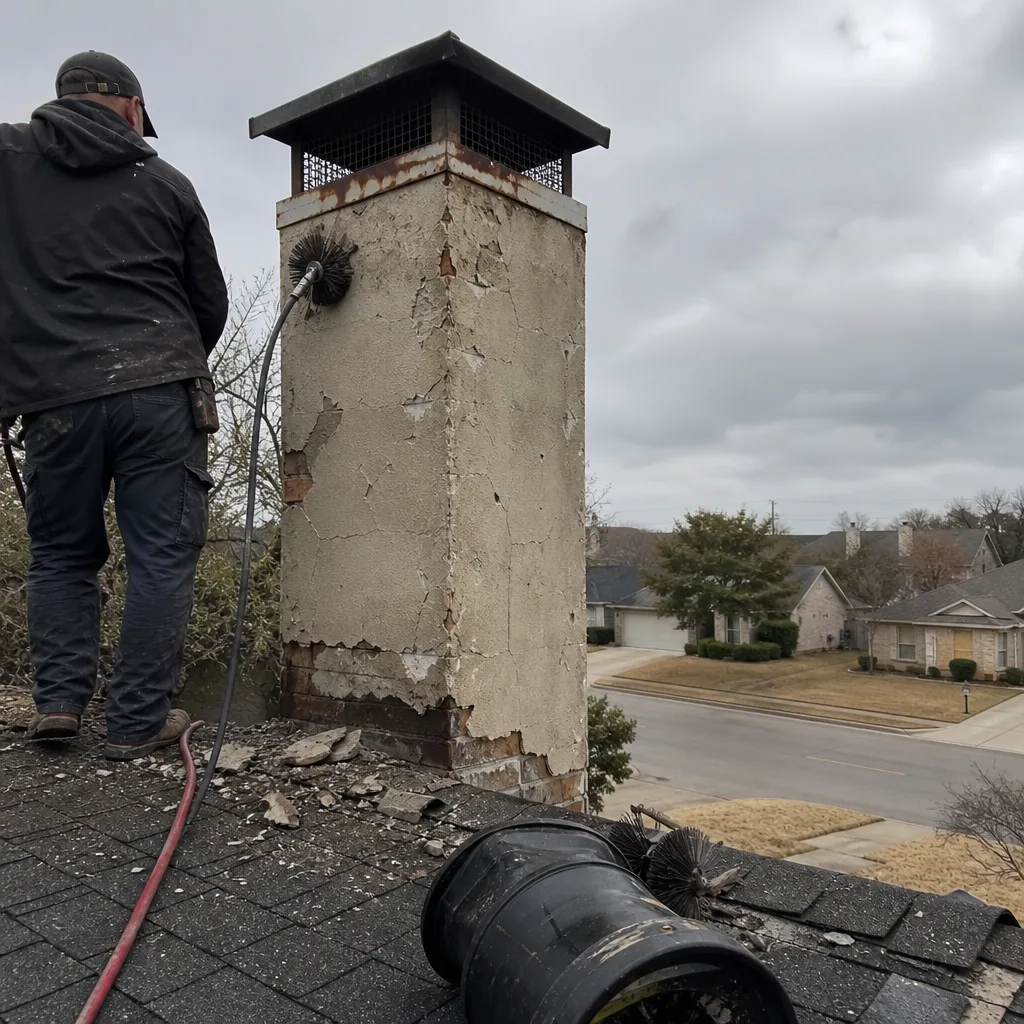 Before
 After
After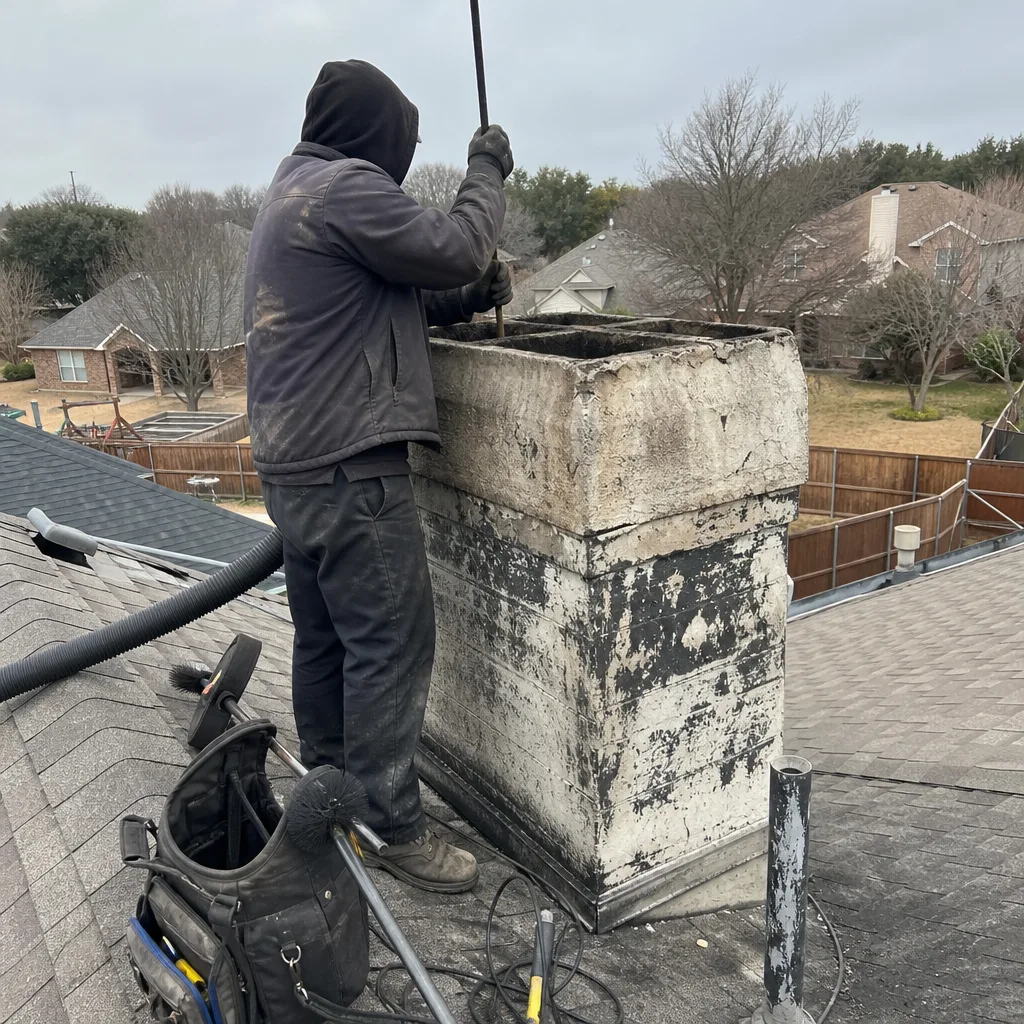 Before
 After
After