
Last updated October 15, 2026
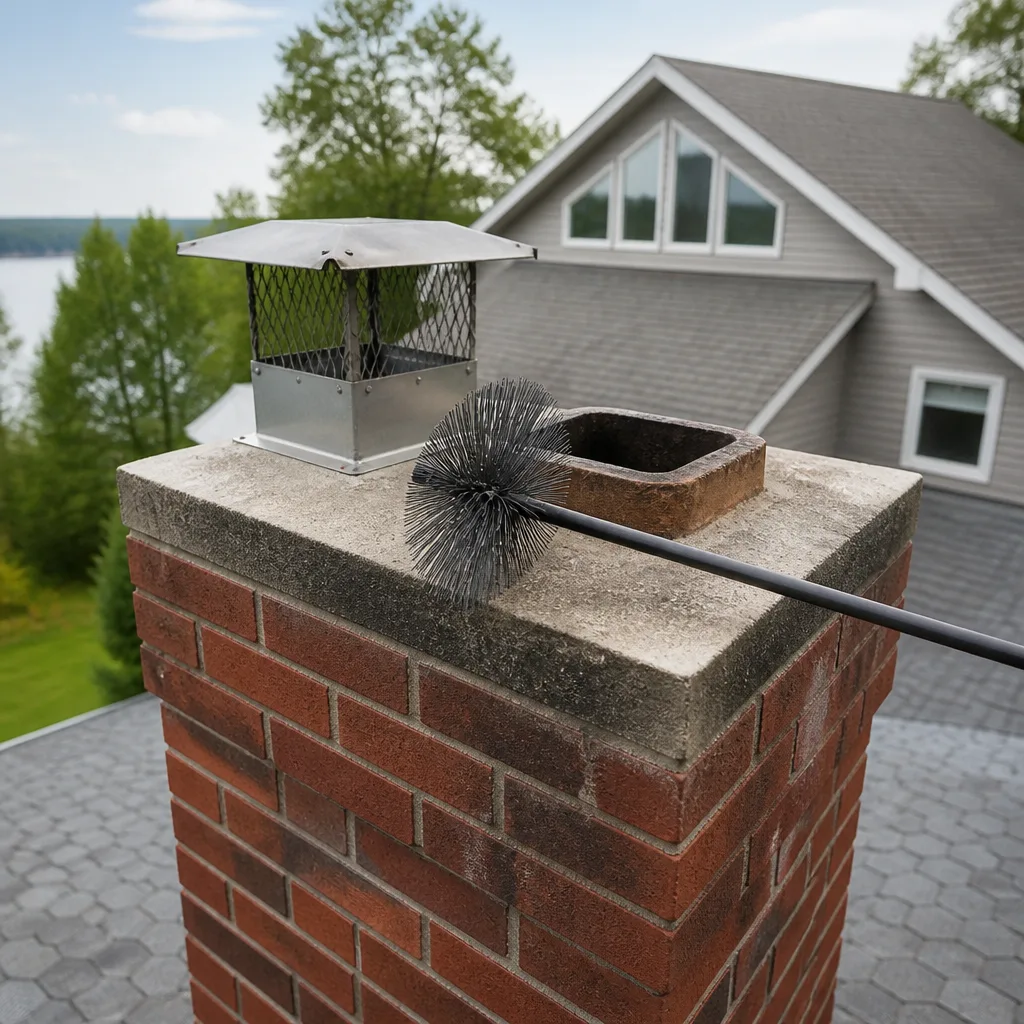 Sweep & inspection
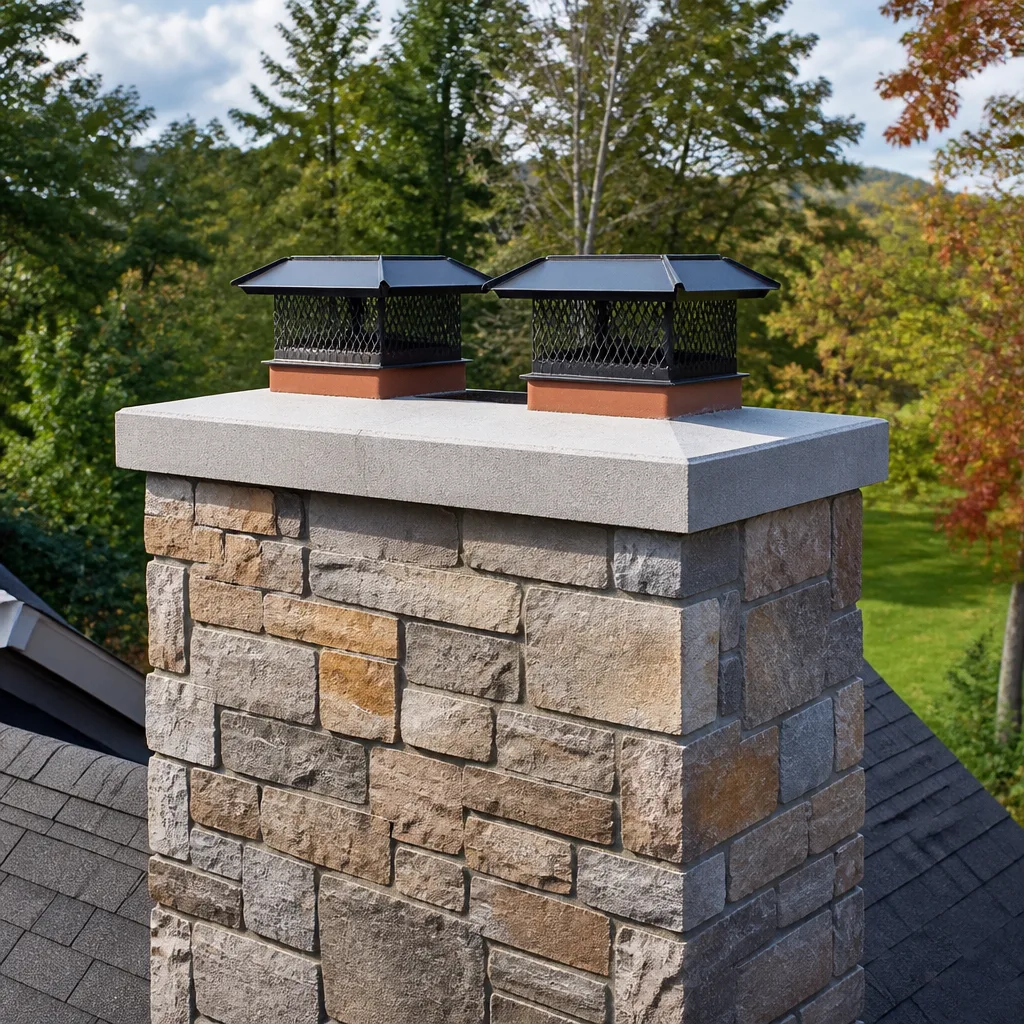 Caps & crowns
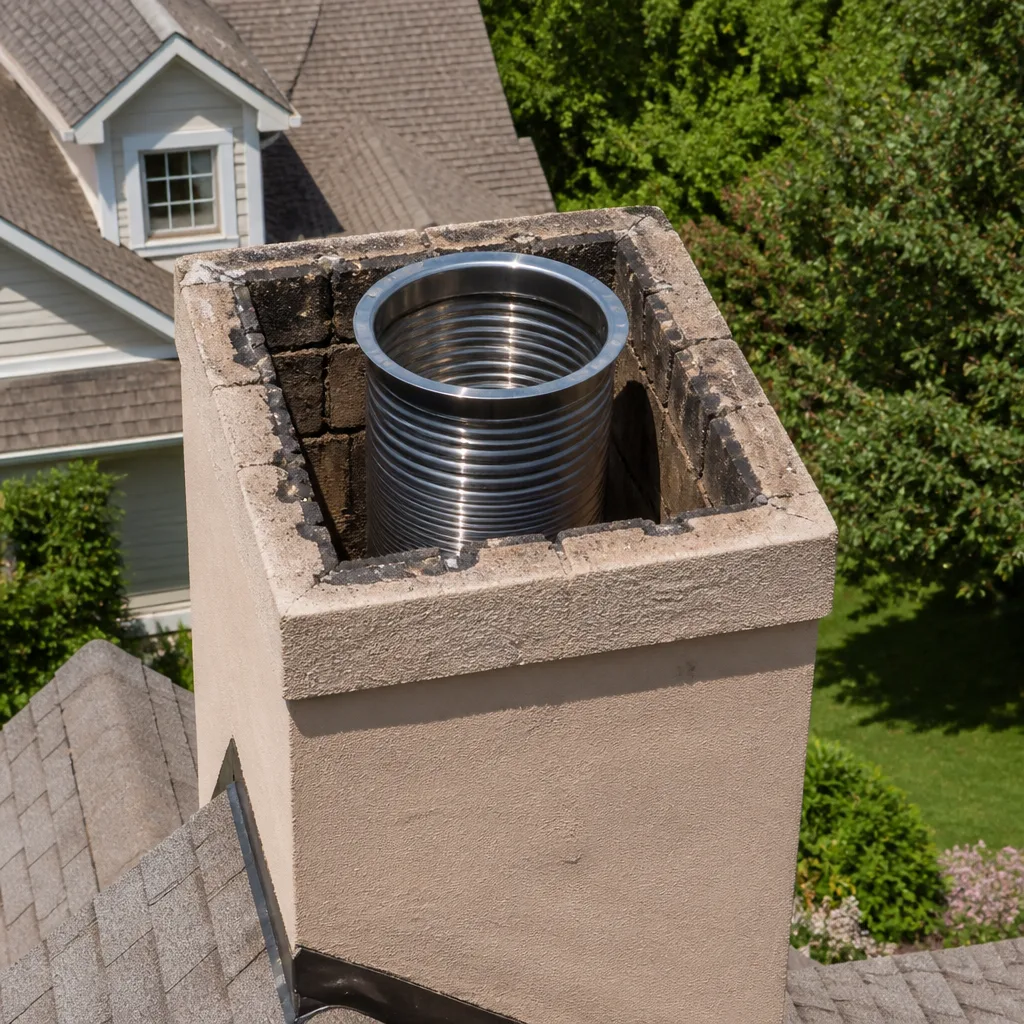 Flue relining
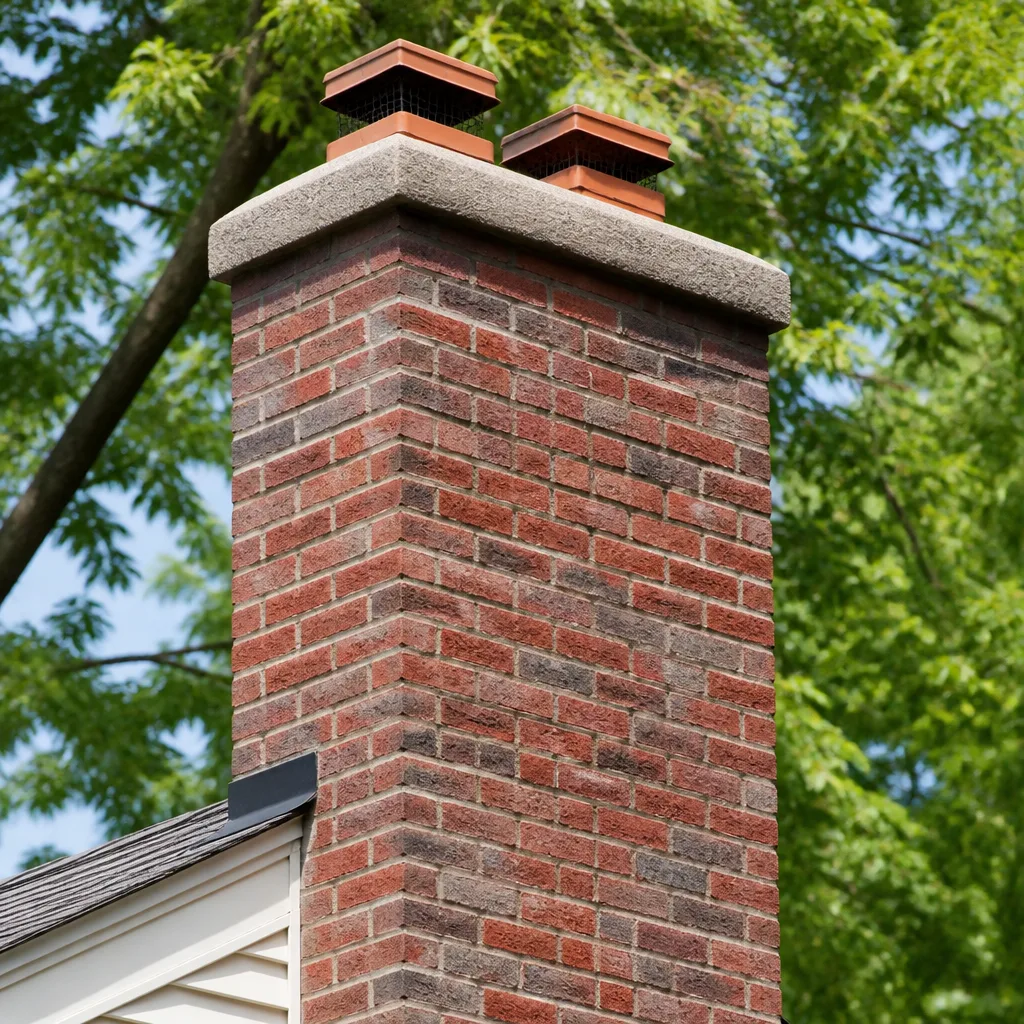 Masonry repair
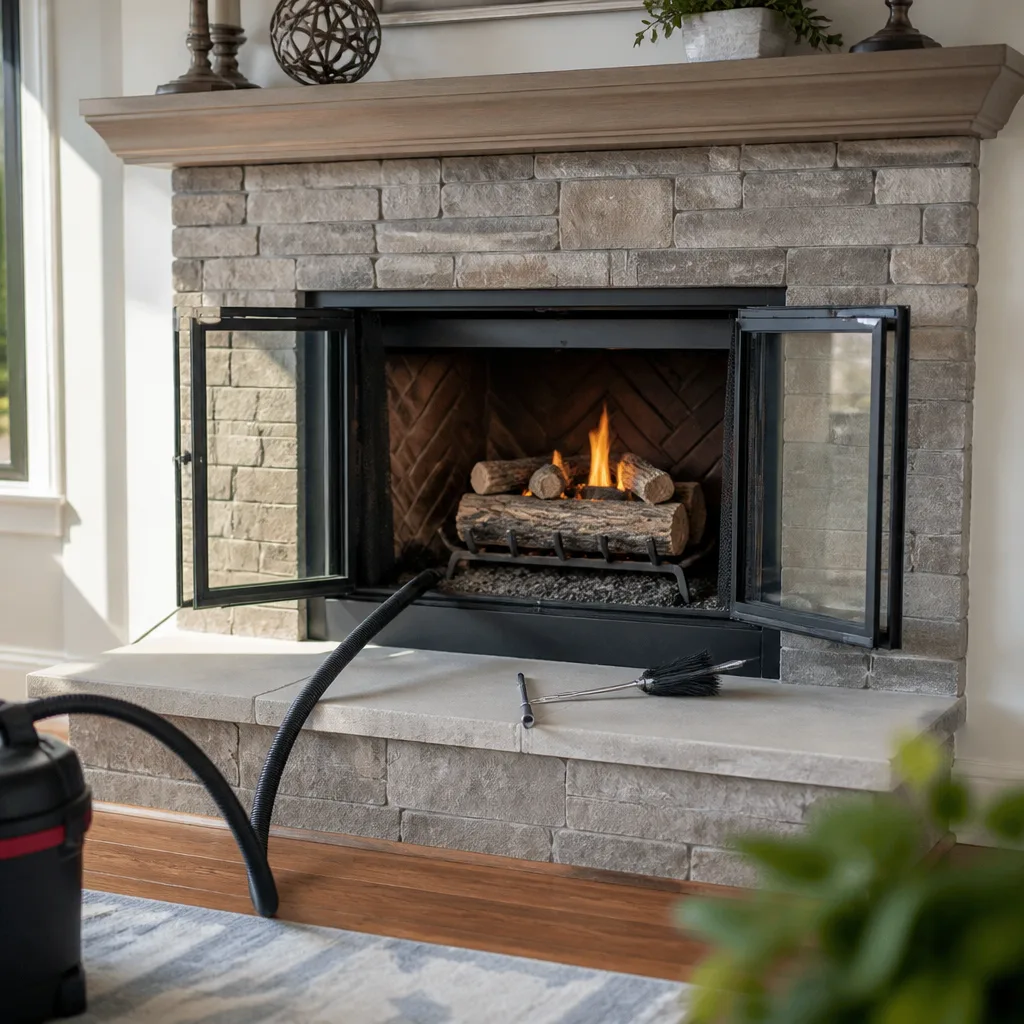 Gas fireplace service
Level 1 sweep and inspection to the NFPA 211 annual standard - flue, crown, cap, and flashing checked and photographed
Chimney sweep logs do not sweep chimneys. They loosen some creosote - which then falls where a brush and vacuum still have to collect it.
How to Hire a Chimney Cleaning Contractor in Dallas: A Step-by-Step Guide
A chimney company that won’t give you a written price before the job starts has already told you everything you need to know about how the job will end. That’s not cynicism, it’s pattern recognition from two decades of watching Dallas homeowners get burned by contractors who treat October like open season. By the time you finish this guide, you’ll know exactly how to separate the tradespeople who stand behind their work from the ones who disappear after the first rain. For more guides & resources on protecting your home, explore our blog. And you’ll understand why the vetting process matters more in Dallas than it does almost anywhere else in Texas.
Quick Answer
To hire a chimney cleaning contractor in Dallas, verify their CSIA certification online, require a written price before scheduling, ask for proof of insurance, and read their guarantee in writing before anyone climbs onto your roof. Expect to pay between $189 and $350 for a standard sweep and inspection in the Dallas-Fort Worth metro, and hang up on anyone who pressures you into same-day “repairs” without camera evidence. The best contractors in Dallas put their pricing, credentials, and guarantee in writing without being asked.
Styles & brands we work with
Table of Contents
- Why the Dallas Market Is Different From Other Cities
- What CSIA Certification Actually Means and How to Verify It
- Five Questions to Ask Before You Schedule, and the Answers That Should Make You Hang Up
- Red Flags Specific to the Dallas Market
- How to Read a Chimney Company’s Guarantee Like a Contract
- How to Document the Job Before, During, and After
- A Step-by-Step Vetting Process Anyone Can Follow
- What It Actually Costs in Dallas Right Now
Why the Dallas Market Is Different From Other Cities
Every October, the Dallas chimney market gets flooded. Sweep companies from out of state roll through with magnet signs on their trucks, door-to-door crews work the North Dallas and Lake Highlands neighborhoods, and suddenly everyone in Collin County is a chimney expert. Why October? Because the first cold snap sends homeowners running to their fireplaces for the first time since March, and the scammers know it. They also know Dallas houses are especially vulnerable: our freeze-thaw cycles crack clay flue tiles faster than in milder climates, and the summer heat bakes mortar until it’s brittle. A chimney that was fine in March may have real problems by November. Legitimate chimney companies in Dallas are busy year-round, which is exactly why the pop-up operators flood in when demand spikes. Hiring in October means you’re competing with a wave of desperate calls while sorting through operators who won’t be answering their phones by February.
In our experience serving Dallas since 2002, the single biggest difference between this market and others is the velocity of the scams. A homeowner in Plano told us last fall that a “sweep” showed up for a $99 special, climbed onto the roof, and came down quoting $4,200 for a liner replacement based on a blurry phone photo. No written scope, no second opinion, no camera footage she could review herself. When she insisted on a written estimate and time to think, the technician dropped the price to $2,100 on the spot. A real problem doesn’t get cheaper by 50 percent in thirty seconds. That’s the Dallas ten-second test: if the number moves dramatically when you push back, the first number was never honest.
What CSIA Certification Actually Means and How to Verify It
The Chimney Safety Institute of America (CSIA) is the main credentialing body for chimney sweeps in the United States. A CSIA-certified sweep has passed a written exam covering fire codes, venting systems, clearances, and inspection standards, and must recertify through continuing education. It is the minimum bar, not the gold standard. Think of it like a driver’s license: it proves the person has met a baseline, not that they’re a good driver. Plenty of CSIA-certified technicians do sloppy work, and some excellent sweeps have decades of experience without the credential. But in Dallas, where unvetted operators pour in every fall, requiring CSIA certification is the fastest way to eliminate a large share of the worst actors before they ever touch your roof.
Verifying a CSIA certification takes about thirty seconds. Go to the CSIA website’s “Find a Certified Sweep” tool, type in the company name, and confirm the certification is current and the name on the credential matches the company name on the truck. Do not accept a paper copy of a certification; anyone can print one. Do not accept “we’re certified with the state of Texas” as a substitute; Texas does not license chimney sweeps, which means anyone with a ladder and a brush can call themselves a chimney professional in Dallas. For the legal requirements that do apply, see our guide to Chimney Cleaning Permits, Codes & Inspections in TX: What You Need to Know. That’s not a flaw in the system worth lamenting, it’s simply a fact that makes your verification step non-negotiable. Ask for the sweep’s individual name, then look him up. When you call to book, the person on the phone should know the sweep’s name without having to put you on hold.
There’s one more thing about certification that most guides skip: ask whether the sweep himself is certified or just the company owner. A company can advertise CSIA certification when only the owner holds it, while the actual technician on your roof is a seasonal hire who watched a training video. The question to ask verbatim: “Will the person on my roof be CSIA-certified, and can you give me his certification number to verify?” If the answer is anything other than an immediate yes, you’ve learned something useful.
Five Questions to Ask Before You Schedule, and the Answers That Should Make You Hang Up
Most hiring guides tell you to get three quotes and compare prices. That’s fine advice for a plumber or a painter, but for chimney work in Dallas, price-shopping without a vetting process just means you’ll choose the cheapest of three possibly unqualified operators. Here are five questions that get to the truth faster than any price comparison, along with the answers that should end the call.
- “What’s your written price for a standard sweep and inspection, and will you put it in writing before you arrive?” The correct answer is a number between roughly $189 and $350, stated immediately, with a promise to confirm it in writing before the job starts. The disqualifying answers are “it depends on what we find,” “we can’t quote over the phone,” or any version of “we’ll see when we get there.” A sweep price does not depend on anything except what you just described. Ashby Chimney Dallas has given a written price before any work starts since the day we opened in 2002, and any company that won’t do the same is planning to charge you more once they’re on the roof.
- “Are you insured and bonded for chimney work specifically, and can you send me the certificates?” The correct answer is yes, followed by a certificate that lists chimney and masonry work, not just general liability. The disqualifying answers are “we’re small, but we’re careful” or “the homeowner’s policy covers it.” Neither is true. If a contractor damages your roof or drops a brush down your flue and isn’t properly insured, that’s on you.
- “Will you show me camera footage of any problem you find before recommending a repair?” The correct answer is yes, with a standard practice of running a chimney camera on every single inspection and reviewing the footage with you on-site. The disqualifying answer is any version of “you don’t need to see it, you just need to trust us.” Modern chimney cameras are inexpensive and every reputable sweep in Dallas uses one. If they won’t show you the problem, there’s usually a reason.
- “If you recommend a repair, will you give me the written scope of work and a written guarantee before I say yes?” The correct answer is yes, and the guarantee should already be written into the boilerplate of the estimate, not offered as a verbal reassurance after you express hesitation. The disqualifying answer is “we guarantee our work” when it’s spoken but never written. A spoken guarantee is legally worthless and practically meaningless.
- “What’s your physical business address in the Dallas area?” The correct answer is a street address you can verify on a map, not a P.O. box, not a UPS store, not a neighboring metro. The disqualifying answers are “we work out of our trucks” or any form of “we’re based in [city three hours away] but we serve Dallas.” Out-of-state operators working Dallas every autumn are a known pattern, and when they vanish after a botched liner install, you’ll have nobody to call. This also matters when a chimney fire happens and you’re standing in front of an insurance adjuster who wants to know who’s been inside your flue.
Red Flags Specific to the Dallas Market
Dallas has its own chimney scam ecosystem, and learning its patterns will protect you more than any generic consumer guide. We’ve watched these play out across North Texas for two decades, and the scripts barely change.
- Post-storm door-knockers. After every hailstorm or high-wind event in Dallas, out-of-town crews go door to door in East Dallas, Garland, and Richardson claiming they noticed chimney damage from the street. Legitimate chimney companies don’t prospect for business by walking neighborhoods after storms; hail damage assessment requires an actual inspection, not a glance from the sidewalk.
- No physical business address. A Dallas chimney contractor without a verifiable local address is a red flag every time. If their “address” routes to a share office or a strip mall suite that’s never actually occupied, you’re dealing with a shell for fly-by-night operators. Ask to see the address on their insurance certificate and confirm it matches what’s on their website.
- Prices that double once they’re on the roof. This is the classic Dallas version: a $79 or $99 sweep special becomes a $600 “repair” within ten minutes of the technician climbing up. The play is simple. The low price gets them in the door, and once they’re on your roof with a camera, suddenly you “urgently” need a new cap, a new crown seal, or a full liner. A legitimate sweep writes the sweep price before the job, and the inspection report is information for you, not ammunition for them.
- The “county inspector” or “fire marshal says” line. No legitimate chimney company in Dallas claims to be sending someone because the county or city requires an inspection. There is no Dallas city program that mandates annual chimney sweeps, and no city inspector goes door to door. If someone tells you they’re “with the city” or “required by the county,” close the door and call the city to report it.
- Cash-only or same-day-discount pressure. A discount that evaporates if you don’t sign today is not a discount, it’s a manipulation. Legitimate chimney work requires time to scope, price, and schedule. Anyone who needs your cash today is trying to outrun something.
- New company, fresh reviews, no history. A Google Business Profile with 37 five-star reviews, all posted in the last thirty days, tells you the company is either brand new or rebranding. Neither is a reason to automatically disqualify, but both are a reason to dig deeper. A Dallas chimney company with a real track record has reviews spanning years, not weeks. Since 2002, we’ve had the benefit of a long tail of reviews that includes a few less-than-perfect ones, and that’s exactly what honest history looks like.
How to Read a Chimney Company’s Guarantee Like a Contract
Most homeowners read the word “guarantee” and stop thinking. That’s why the word is worthless unless it’s written down with specific terms. In Texas, a verbal promise about future performance is nearly impossible to enforce unless it’s in writing and signed. “Satisfaction guaranteed” is not a guarantee of anything specific; it’s a marketing phrase with no legal teeth. What you’re looking for is a written, signed document that answers four questions.
First: what exactly is covered? “We guarantee our work” covers nothing, because “work” isn’t defined. A real guarantee lists what’s covered: the sweep, the inspection, the specific repair, the liner installation. Second: for how long? Six months? One year? The lifespan of the liner? If the time period isn’t in writing, the guarantee doesn’t exist. Third: what happens when it fails? Does the company come back and fix it at no charge, or do they “assess the situation”? “Assessing” is not fixing. Fourth: who decides whether it failed? If the same technician who did the original work is the sole judge of whether his own work failed, you don’t have a guarantee, you have a guy who will never admit he made a mistake.
Ashby Chimney Dallas operates under the Kingswell Guarantee, and the name matters because it’s a specific, written standard that every independently owned location follows. It’s the Kingswell Way: say the price, show up in the window, leave it cleaner, put the guarantee in writing, come back if it fails. Specifically, every repair we make is covered for a full year under our 365-Day Done Right Promise. If a covered repair fails within that year, we return and correct it at no charge. Not “assess it.” Not “negotiate it.” We fix it. And because the guarantee is written into every estimate and signed before work begins, it’s not a promise, it’s a contract term. That distinction is the whole game. When you compare chimney contractors in Dallas, read the guarantee before you compare the price.
How to Document the Job Before, During, and After
Most homeowners have no recourse when a chimney job goes wrong because they have no record of what was supposed to happen, what actually happened, or what they paid. Building a simple paper trail takes fifteen minutes and gives you leverage if something fails.
Before the job: Get the written estimate, and read it. Confirm the scope of work, the exact price, the materials if any are being installed, and the guarantee terms. If the technician shows up and the invoice at the door doesn’t match the estimate you approved, that’s a problem to flag before work starts. Text or email a confirmation of the appointment time and the agreed price so there’s a timestamped record.
During the job: Ask for the camera footage. If they find damage, have them show it to you on the spot and send you the clip or screenshots. Take your own photos of the materials they bring, especially if they’re installing a liner or rebuilding a crown. Note the brands: if you’re paying for a stainless steel liner, those brands come from established chimney-trade manufacturers like Olympia Chimney and Copperfield. If the technician can’t name the brand of liner he just quoted you, that’s a problem.
After the job: Keep the invoice, the guarantee documents, and the before-and-after photos together. Test the fireplace or stove immediately if weather permits. If anything seems off in the first few weeks, call immediately; the guarantee clock is already running. A reputable company will send someone back. A fly-by-night operator won’t answer. Documenting the job doesn’t just protect you in a dispute; it also gives you a clear record for yourself, your insurance company, and any future homeowner when you sell the house.
A Step-by-Step Vetting Process Anyone Can Follow
Here’s the entire hiring process for a Dallas chimney sweep, compressed into seven steps. If you do nothing else in this guide, do this.
- Verify the company has a real Dallas address. Look it up on a map. If it’s a mail drop, a P.O. box, or a location three hours away, move on.
- Verify CSIA certification online. Thirty seconds on the CSIA site. Check the technician’s individual name, not just the company. If they’re not certified, ask why.
- Ask for the written price before scheduling. A standard sweep and Level 1 inspection in the Dallas area should run between roughly $189 and $350. If they can’t give you a price without seeing the chimney first, that’s the pricing model, not the inspection process.
- Ask for proof of insurance and bonding. Not “we’re insured,” but a copy of the certificate that lists chimney work explicitly. Review it before anyone climbs a ladder.
- Confirm the guarantee in writing. Read the terms: what’s covered, for how long, what happens if it fails. If there’s no written guarantee, imagine the conversation you’ll have when the repair cracks in eight weeks.
- Get everything on paper the day of the job. Written scope, written price, written guarantee, all signed. Compare to what was quoted on the phone. If the invoice is higher and nobody told you why before the work started, stop the job.
- Document and store everything. The estimate, invoice, guarantee, and photos. This is your leverage, and it costs you nothing.
We’ve walked hundreds of Dallas homeowners through this exact process, and the good contractors welcome every step of it. The ones who push back or dismiss these as “extra hassle” are answering your questions by refusing to answer them.
What It Actually Costs in Dallas Right Now
Prices in Dallas for chimney cleaning run slightly higher than Texas state averages because of two factors: housing stock and demand. For a detailed look at what to expect, see our Chimney Cleaning Cost Breakdown: The Dallas Homeowner’s Reference for 2026. Dallas has a high density of older brick homes with masonry chimneys built between 1950 and 1990, many of which have original clay flue tiles now entering their failure years. And with the October demand spike, prices rarely come down. Here’s what we see across the market in Dallas and the surrounding suburbs in 2025.
| Service | Typical Dallas Price Range | Notes |
|---|---|---|
| Standard chimney sweep (Level 1) | $189 – $250 | Includes basic visual inspection; most common for annual maintenance. |
| Sweep + Level 2 camera inspection | $250 – $350 | Required for real estate transactions, after chimney fires, or after structural events like hailstorms. |
| Chimney cap installation | $250 – $450 | Stainless steel caps from brands like Gelco and Olympia Chimney; life expectancies of 10-20 years. |
| Flue liner replacement (stainless steel) | $2,800 – $5,000 | Varies by height, accessibility, and liner brand; this is the biggest-ticket item in chimney repair. |
| Crown repair or rebuild | $400 – $900 | Water damage is the leading cause of Dallas chimney deterioration, and the crown is the first line of defense. |
If you get a quote far below these ranges, ask what’s being skipped. A $69 sweep may not include an inspection at all, in which case you’ve paid for a brushing and learned nothing about the condition of your flue. A $1,500 liner replacement that should cost $4,000 may be a patch job using off-brand materials. Ask for the brand names. We use professional-grade materials from established chimney-trade manufacturers like Copperfield and Famco, and we’re happy to tell you what’s going into your chimney because the brand on the box matters for longevity. A contractor who can’t name his materials is a contractor whose guarantee should be read twice.
Cost transparency is part of the Kingswell Way at Ashby Chimney Dallas home, and it’s the simplest trust test in this business: the price you’re quoted should be the price on the invoice, and if it isn’t, there should be a written explanation before any work begins. That’s not a premium feature. In a functioning market, it’s the baseline.
Common Mistakes to Avoid
- Hiring the first company that answers the phone in October. The busiest season in Dallas is also the scam season. Taking an extra day to vet a company beats spending a month fighting a chargeback.
- Skipping the CSIA verification because “the guy seemed nice.” Niceness is not a credential. Thirty seconds on the CSIA website eliminates the most common frauds in the Dallas market.
- Accepting a verbal guarantee. A guarantee that isn’t written down, with specific coverage and a specific time period, doesn’t exist. If it matters when the repair fails in February, it has to be in writing now.
- Ignoring the physical address. A Dallas chimney company without a verifiable Dallas address is a sign of a business built to disappear. When your chimney leaks in next year’s spring storms, you need someone to call.
- Comparing price without comparing scope. A $150 sweep with no inspection is more expensive than a $275 sweep with a full camera inspection if the cheaper one misses a cracked flue tile that becomes a house fire. Know what’s included in writing.
- Paying cash for repairs recommended on the spot. If a technician “discovers” a problem and needs an immediate decision and immediate cash, you’re not being sold a repair, you’re being handled. A legitimate repair can wait 48 hours and can be paid with a method that creates a paper trail.
- Letting anyone on your roof without insurance documents. A fall off a Dallas roof is a serious claim. If the contractor isn’t insured for chimney work, you’re the one on the hook.
See the difference
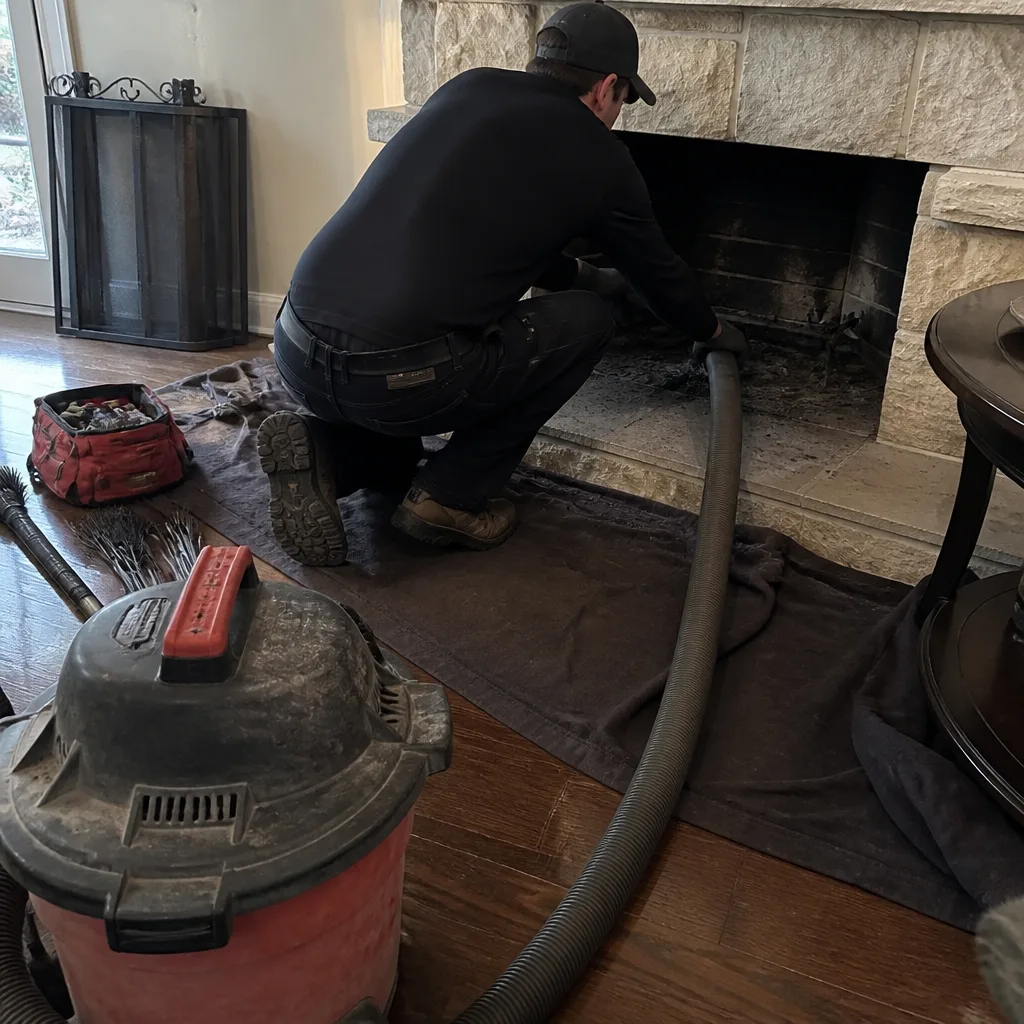 Before
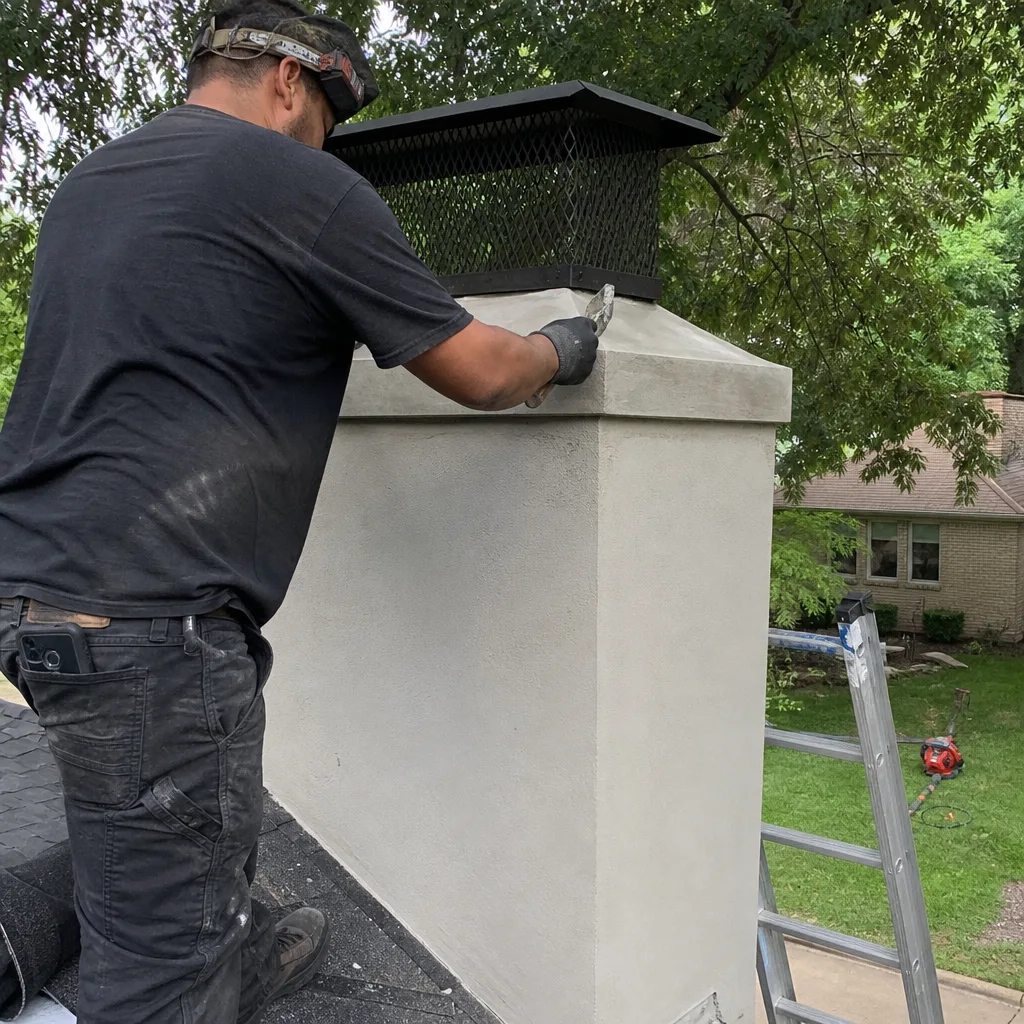 After
After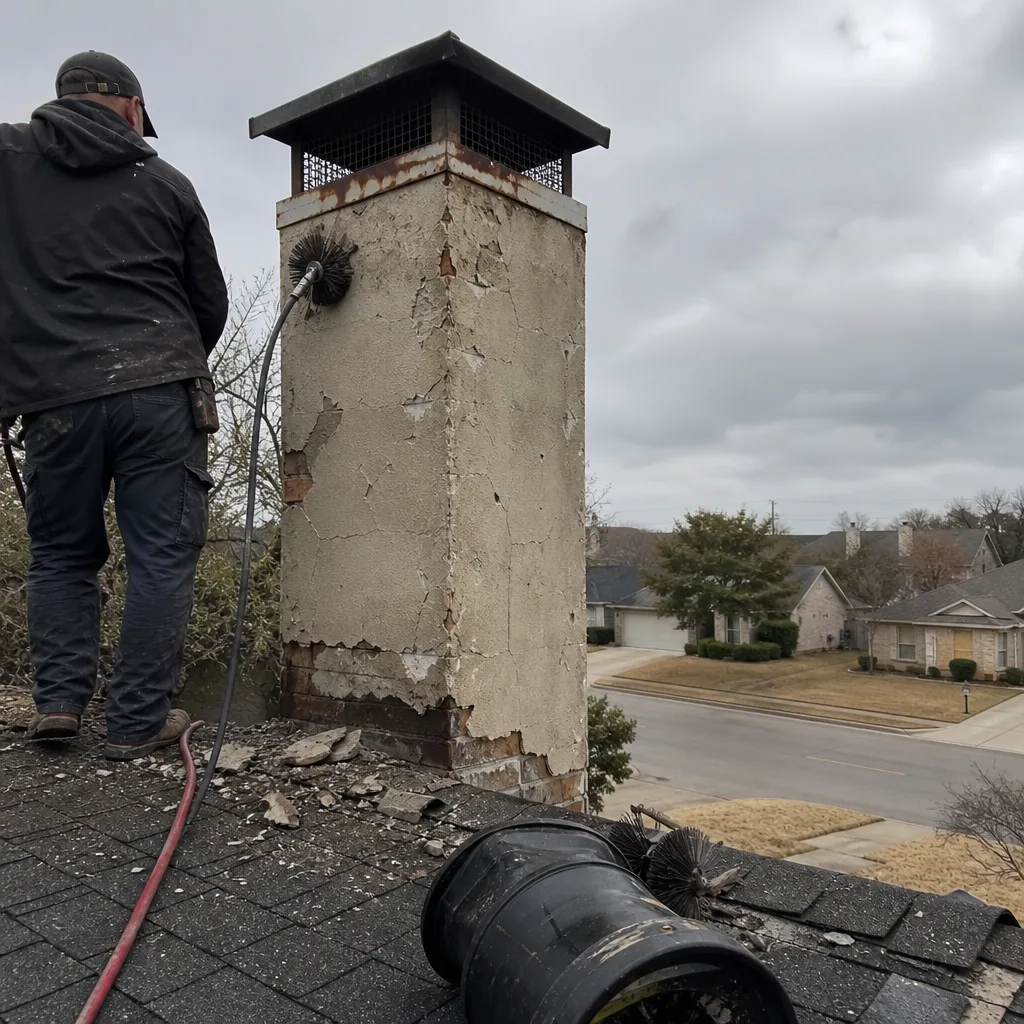 Before
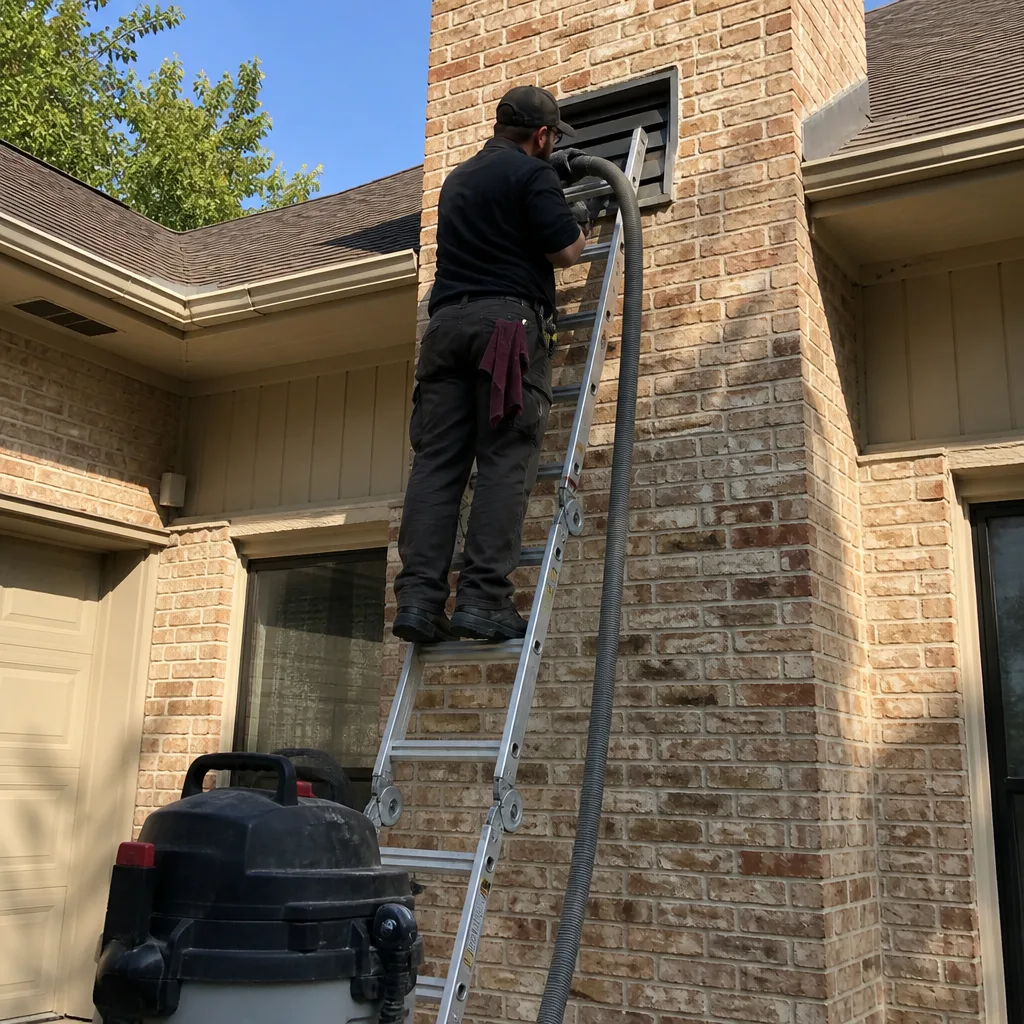 After
After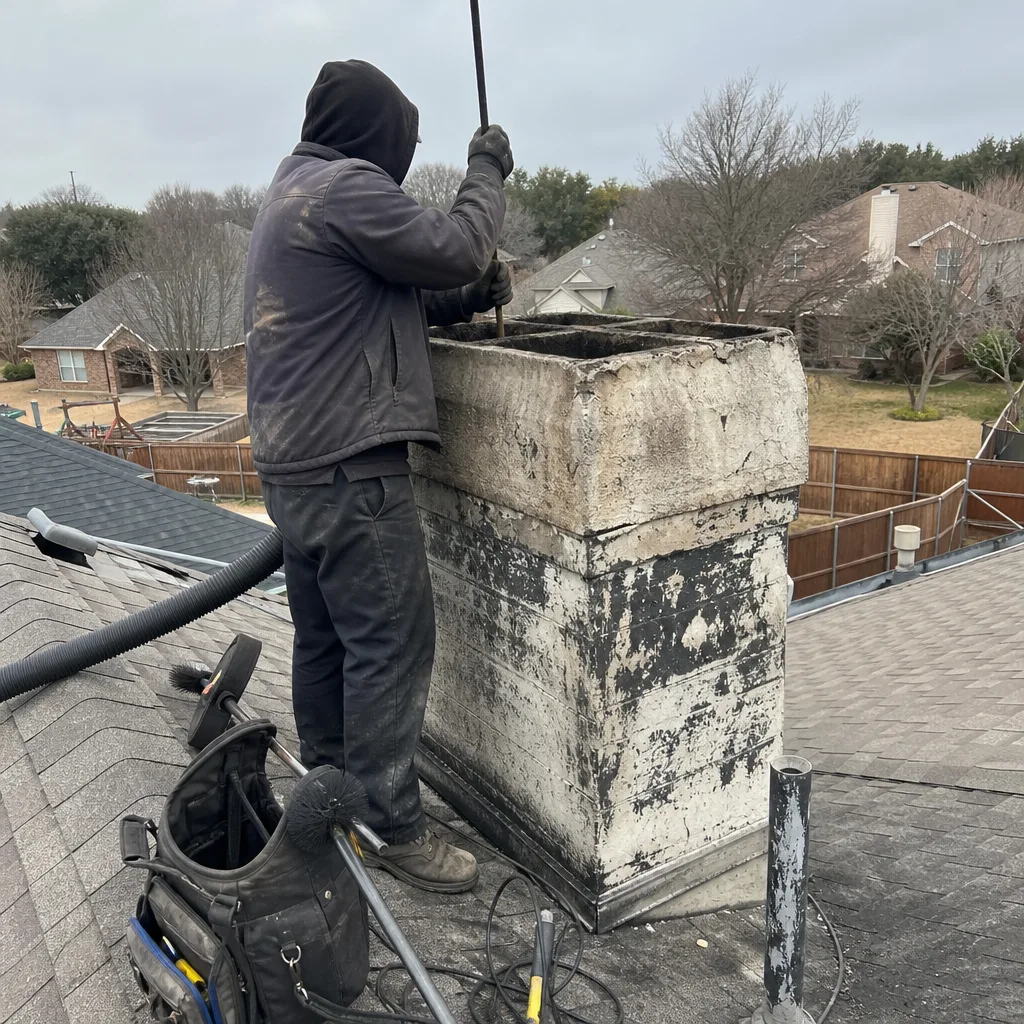 Before
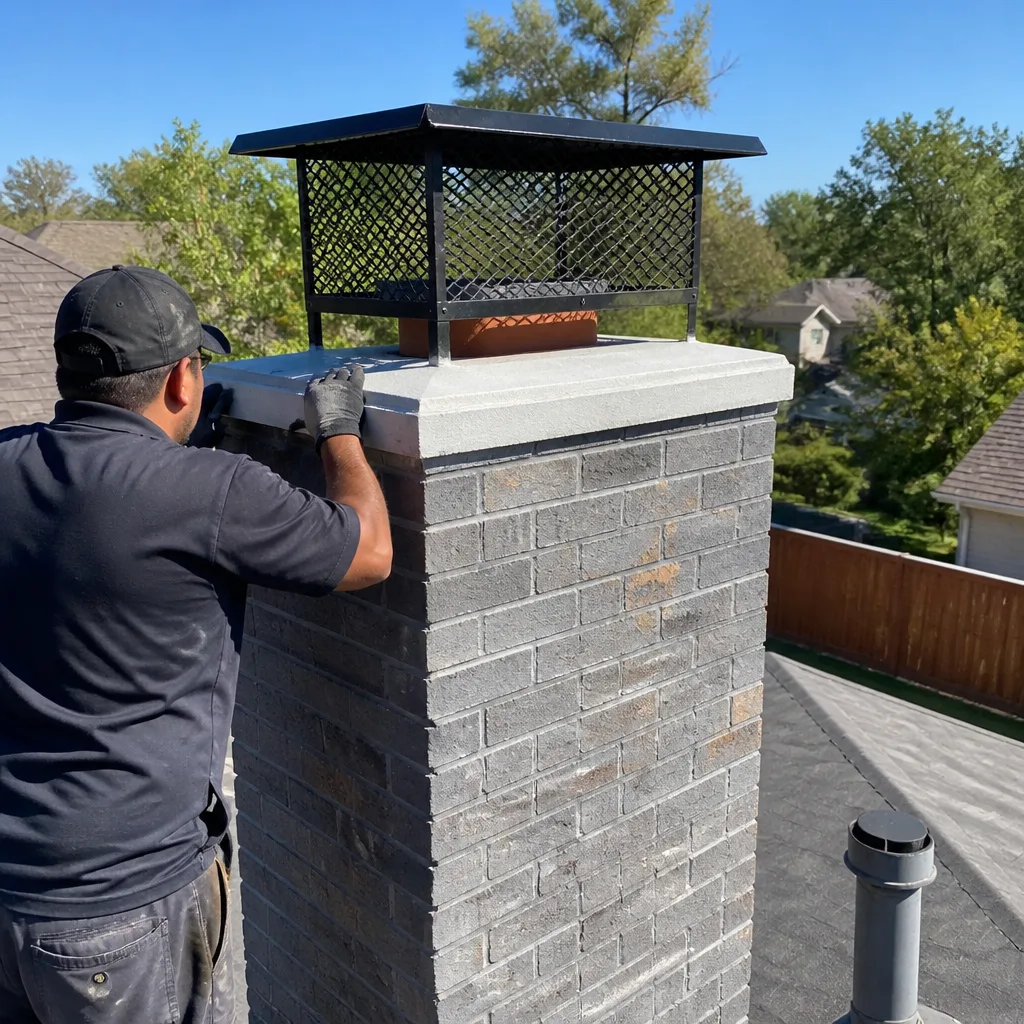 After
AfterWhen to Call a Professional
Chimney cleaning and inspection are trades, not DIY projects, and the reason is safety. A chimney exists to vent poisonous combustion gases out of your Dallas home, and a failed flue liner or a blocked flue can send carbon monoxide into your living room while you sleep. If you’ve never had your chimney inspected, if you’ve just bought a Dallas home with a masonry fireplace, if you smell smoky odors when the fireplace isn’t in use, or if you’ve had a chimney fire, call a professional before using the fireplace again. Ashby Chimney Dallas offers free estimates across the Dallas area, and we’re happy to walk through what your chimney needs and what can safely wait. Call (361) 314-3193 to talk to a live person, any hour, any day. No voicemail loops, no callback forms, no waiting until Monday.
Frequently Asked Questions
A standard chimney sweep in Dallas typically costs between $189 and $250, while a sweep with a Level 2 camera inspection runs $250 to $350. Prices vary by company, chimney height, and the condition of the flue, but any Dallas company quoting significantly under $150 is probably not performing a real inspection. Call (361) 314-3193 for a written price before you book.
The National Fire Protection Association recommends an annual chimney inspection and cleaning whenever 1/8 inch of creosote builds up, but in practical terms, Dallas homeowners who burn regularly during the winter should have the chimney swept once a year. If you burn only occasionally, an inspection every two years may be sufficient, but the annual cadence is the safest default in our climate. The freeze-thaw cycle here accelerates flue damage even when you’re not burning regularly.
You should never accept a liner replacement recommendation without seeing camera evidence of the damage. A cracked clay flue tile is a real problem and a common one in older Dallas homes, but the only way to know is to see it. Ask the technician to show you the camera footage, explain why the liner can’t be repaired or safely left in place, and give you the recommendation in writing so you can get a second opinion. In some cases, a HeatShield resurfacing can repair cracked tiles at a fraction of the cost of a new liner; in others, a new stainless steel liner from a brand like DuraFlex is the right call. For an honest assessment with camera evidence, call (361) 314-3193.
Creosote builds up on the flue walls, and creosote is combustible. The first hot fire of the season can ignite it, creating a chimney fire that reaches temperatures high enough to crack the flue tiles, warp the liner, and, in the worst cases, spread into the house. Even without a fire, years of moisture and creosote can damage the masonry and cause expensive cracks in the crown. A $200 sweep is the cheapest insurance you can buy for your Dallas home. That’s not a scare tactic; it’s the reason the entire chimney cleaning trade exists.
Sometimes, but not always during the Dallas fall rush, when reputable companies are booked one to two weeks out. If you need service before burning season, call earlier in the fall rather than waiting for the first cold snap. If a company can always come the same day, even in October, ask yourself why they have such open availability in a busy season. The answer is often not flattering. Call (361) 314-3193 and we’ll tell you straight up what our next opening looks like.
A Level 1 inspection is a visual check of the readily accessible parts of the chimney and fireplace, no special equipment required, done during a routine sweep. A Level 2 inspection includes everything in Level 1 plus a camera scan of the entire flue interior and the accessible exterior. Level 2 is required in real estate transactions, after a chimney fire, after any weather event that might have caused structural damage, and before relining. When buying a home in Dallas with an existing fireplace, always request a Level 2 inspection from a company like our chimney inspection service in Dallas, not just the standard sweep the seller’s agent scheduled.
The Bottom Line
Hiring a chimney cleaning contractor in Dallas comes down to paperwork and pattern recognition. Verify the CSIA certification online. Require a written price before the job starts. Read the guarantee like a contract, because if it isn’t written and specific, it’s nothing. Watch for the Dallas-specific red flags: post-storm door-knockers, no physical address, prices that double on the roof, and “city inspector” impersonators. Then document everything. There are good, trustworthy chimney professionals in this city, and the vetting process above is designed to find them efficiently. If you want to skip the search, Ashby Chimney Dallas has followed the same Kingswell Way since 2002: professional chimney sweeps in Dallas, fireplace repair in Dallas backed by a written guarantee, and a live person on the phone whenever you call (361) 314-3193.
Written by Nathan Corliss, Owner at Ashby Chimney Dallas, serving Dallas since 2002.