
Last updated October 15, 2026
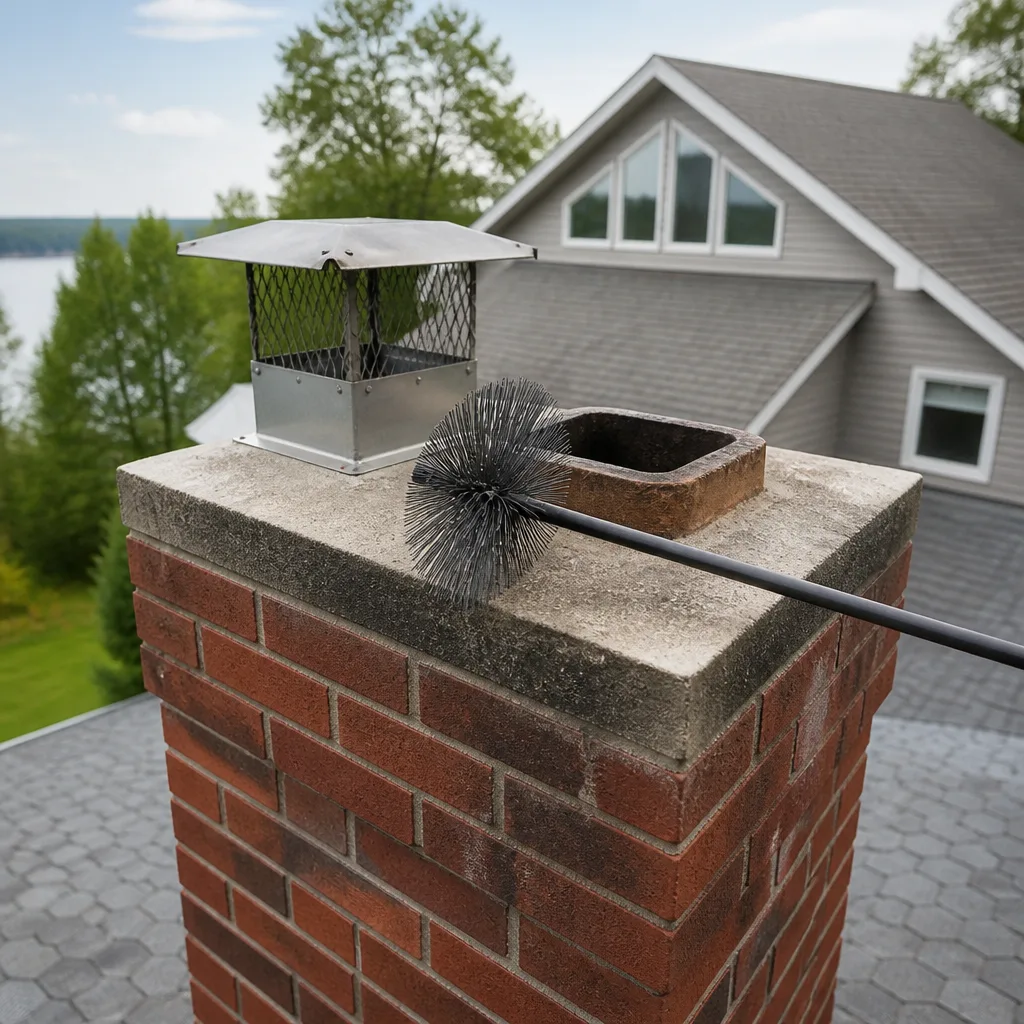 Sweep & inspection
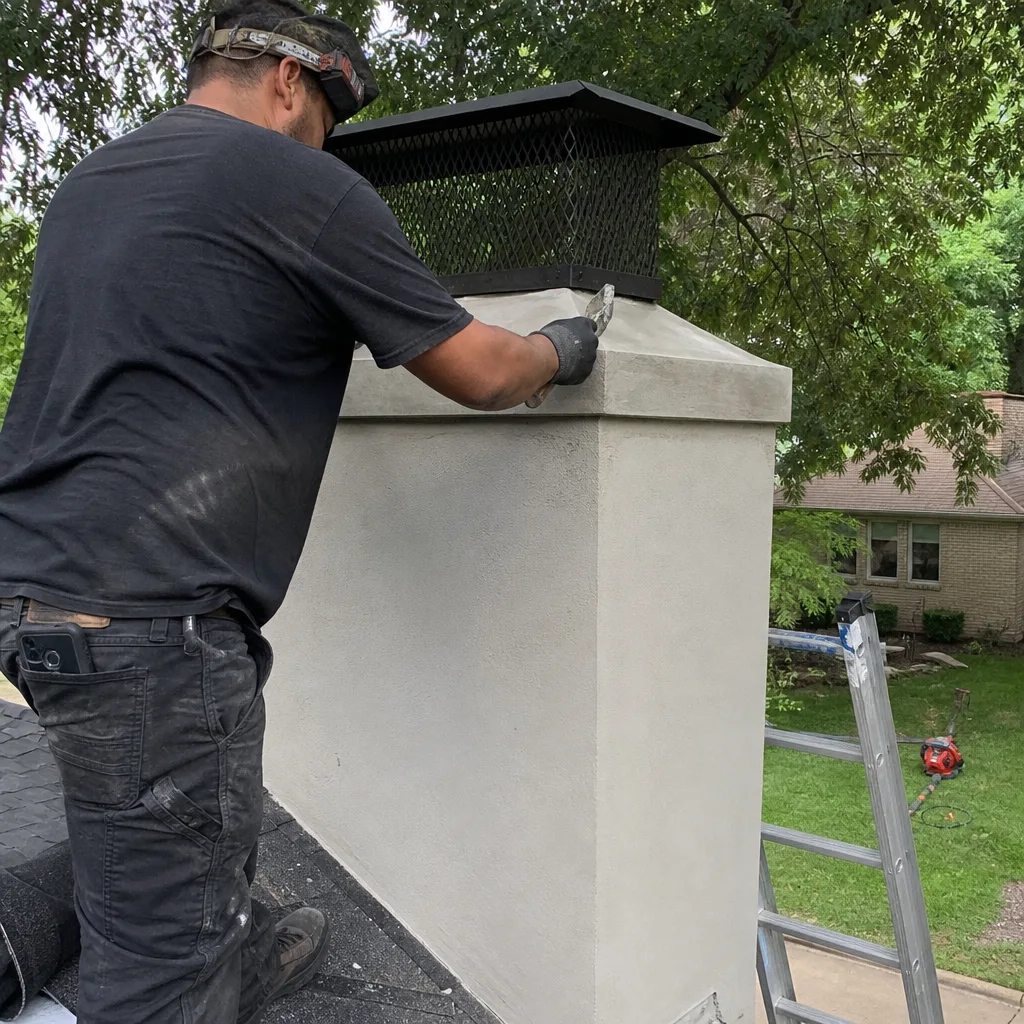
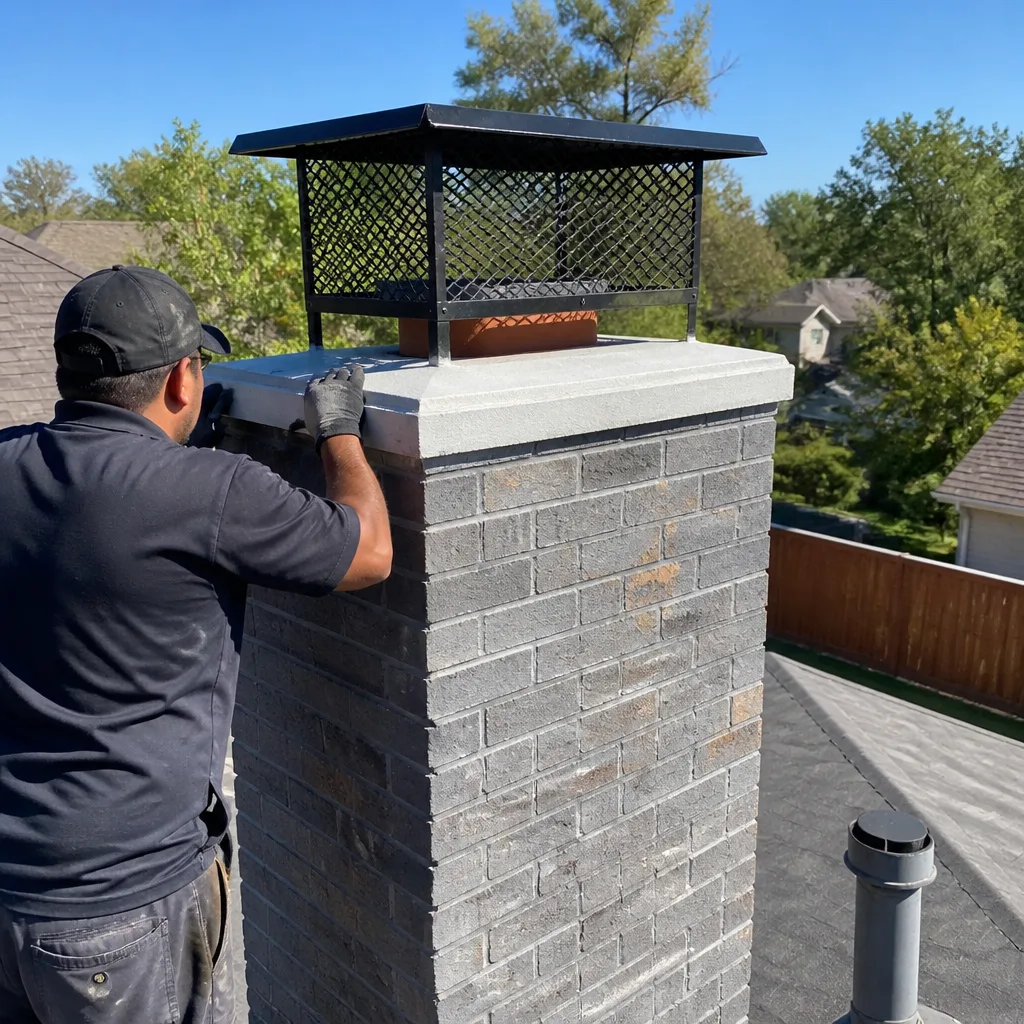
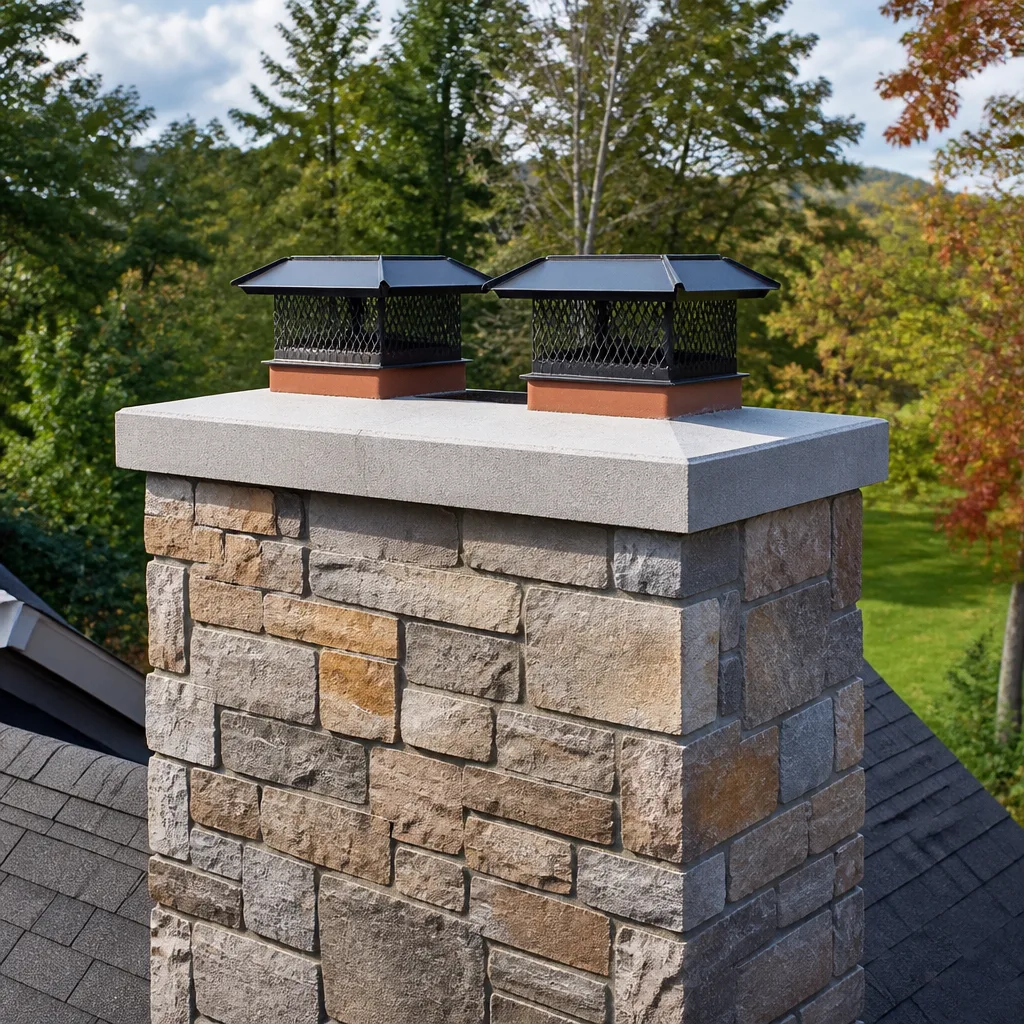 Caps & crowns
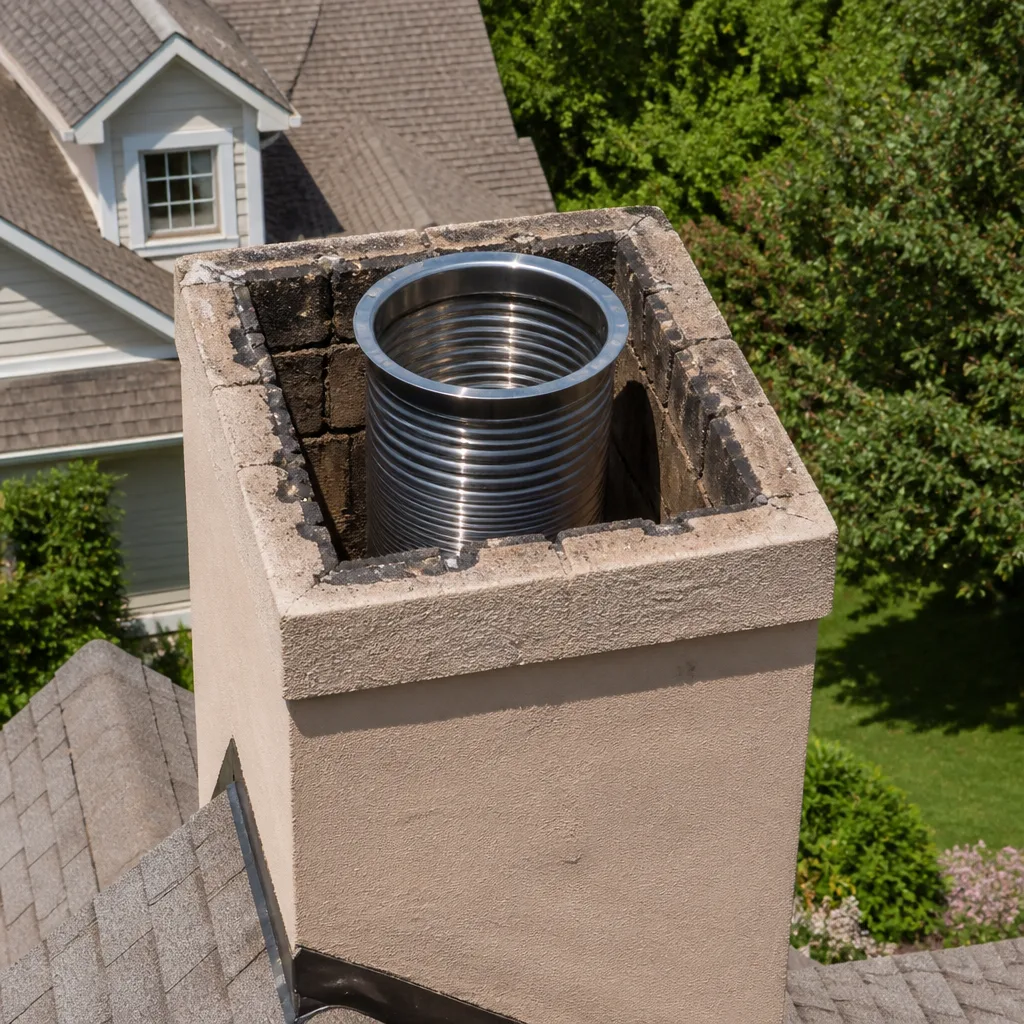 Flue relining
 Masonry repair
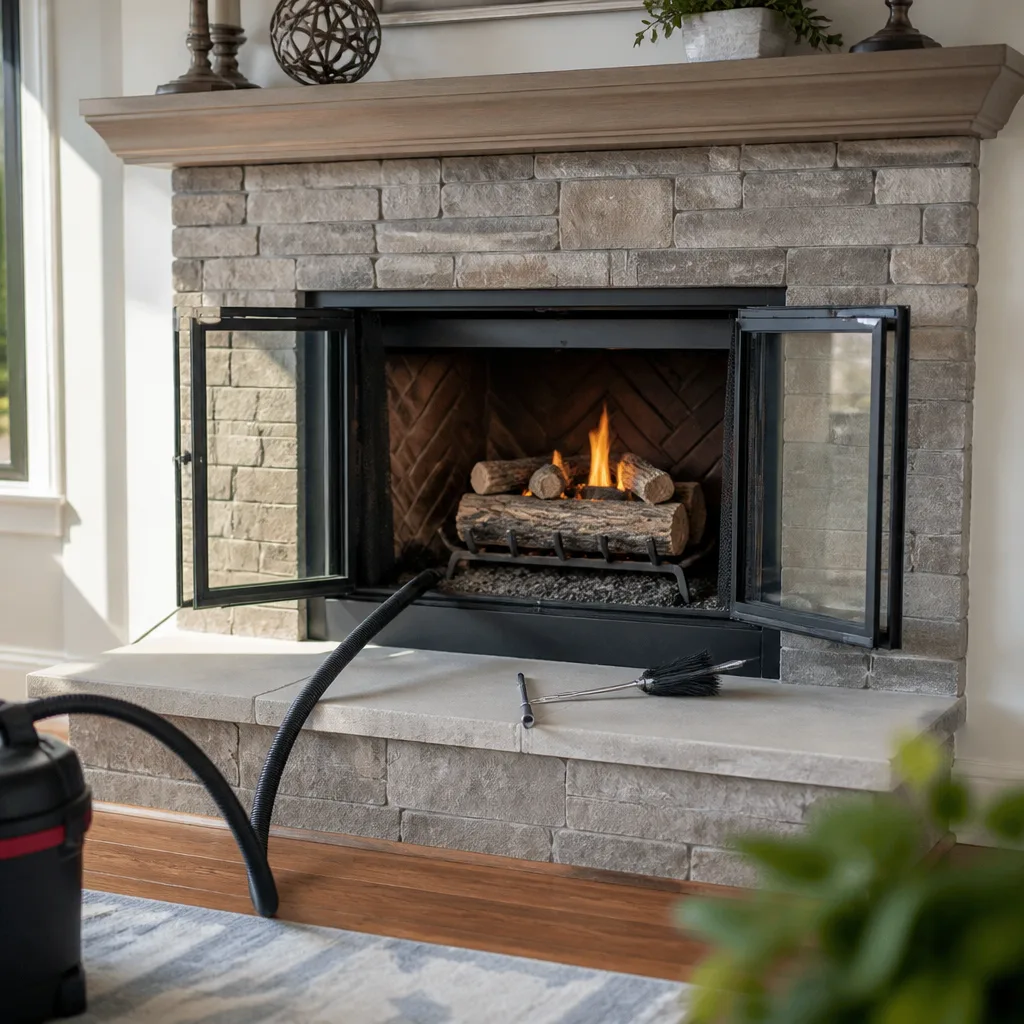 Gas fireplace service
Level 1 sweep and inspection to the NFPA 211 annual standard - flue, crown, cap, and flashing checked and photographed
Chimney sweep logs do not sweep chimneys. They loosen some creosote - which then falls where a brush and vacuum still have to collect it.
The Complete Guide to Chimney Cleaning in Dallas
Most chimney fires in North Texas happen in fireplaces that were used fewer than ten times the previous season. Read that again, because it upends everything you’ve heard about chimney maintenance. Low use doesn’t mean low risk here. It means a different kind of risk, one shaped by Dallas summers that bake creosote into a hard, glassy crust, clay soil that shifts foundations and cracks flue liners, and a contractor market where seasonal crews roll through town each fall. This guide explains what actually happens inside a Dallas chimney, what cleaning should cost, how to read an estimate without getting taken, and when a sweep is genuinely urgent versus when it can wait. For more guides & resources on keeping your home safe, see our blog.
Quick Answer
Chimney cleaning in Dallas typically costs between $189 and $350 for a standard sweep of a wood-burning fireplace, with gas fireplaces running $149 to $250. Most sweeps take 60 to 90 minutes. Dallas homeowners should have a sweep and Level 1 inspection done at least once a year if they burn more than a cord of wood, and a Level 2 inspection after any foundation shift, storm, chimney fire, or property purchase.
Styles & brands we work with
Table of Contents
- Why Dallas Chimneys Fail Differently
- What a Chimney Service Actually Does During Cleaning
- How Much Does Chimney Cleaning Cost in Dallas?
- Level 1, Level 2, Level 3: Which Inspection Do You Need in Dallas?
- How to Read a Written Estimate Line by Line
- How Often Should You Sweep a Dallas Chimney?
- The DIY Question: What You Can and Should Not Do Yourself
- Common Mistakes to Avoid
- When to Call a Professional
- Frequently Asked Questions
Why Dallas Chimneys Fail Differently
Dallas sits on expansive clay soil, the same Blackland Prairie clay that makes foundation repair a regular line item for homeowners from Plano to Waxahachie. This soil swells when wet and shrinks during drought. The movement is slow, but over years it is relentless. A chimney is the heaviest vertical structure attached to a house, so when the slab shifts even a quarter inch, the chimney moves with it. Hairline cracks open in the firebox. Flue liners, the clay or steel tubes that vent combustion gases out of your home, develop splits and separations. None of this requires a fire to happen. It happens while the fireplace sits cold.
Then there is the heat. Dallas routinely sees 30 to 40 days a year above 100°F. That thermal cycling does two things. First, it drives moisture out of mortar faster than in cooler climates, leaving joints brittle and powdery. Second, it bakes whatever creosote is already inside the flue into a dense, tar-like coating that is harder to remove and more flammable per square inch than the fluffy creosote common in damp, cooler regions. A chimney swept in April in Minnesota produces a different kind of deposit than a chimney swept in October in Dallas. Our crews see it every fall: dark, glassy residue that cannot be brushed off with a standard sweep alone and requires rotary cleaning or chemical treatment.
Add to that a seasonal contractor market. North Texas attracts chimney crews from out of state each fall who work a few weeks of cold-weather demand and then move on. Homeowners who hire based on a door-hanger or a Facebook ad often discover in January that the company no longer answers the phone. The Dallas chimney market rewards a simple discipline: work with a company that has a local address, a local phone number, and a written guarantee. Anything less is a gamble. For help choosing, read our How to Hire a Chimney Cleaning Contractor in Dallas: A Step-by-Step Guide.
What a Chimney Service Actually Does During Cleaning
We believe a homeowner should know exactly what they are paying for before the technician arrives. Here is the step-by-step of a proper chimney cleaning visit in a Dallas home, the way Ashby Chimney Dallas runs it.
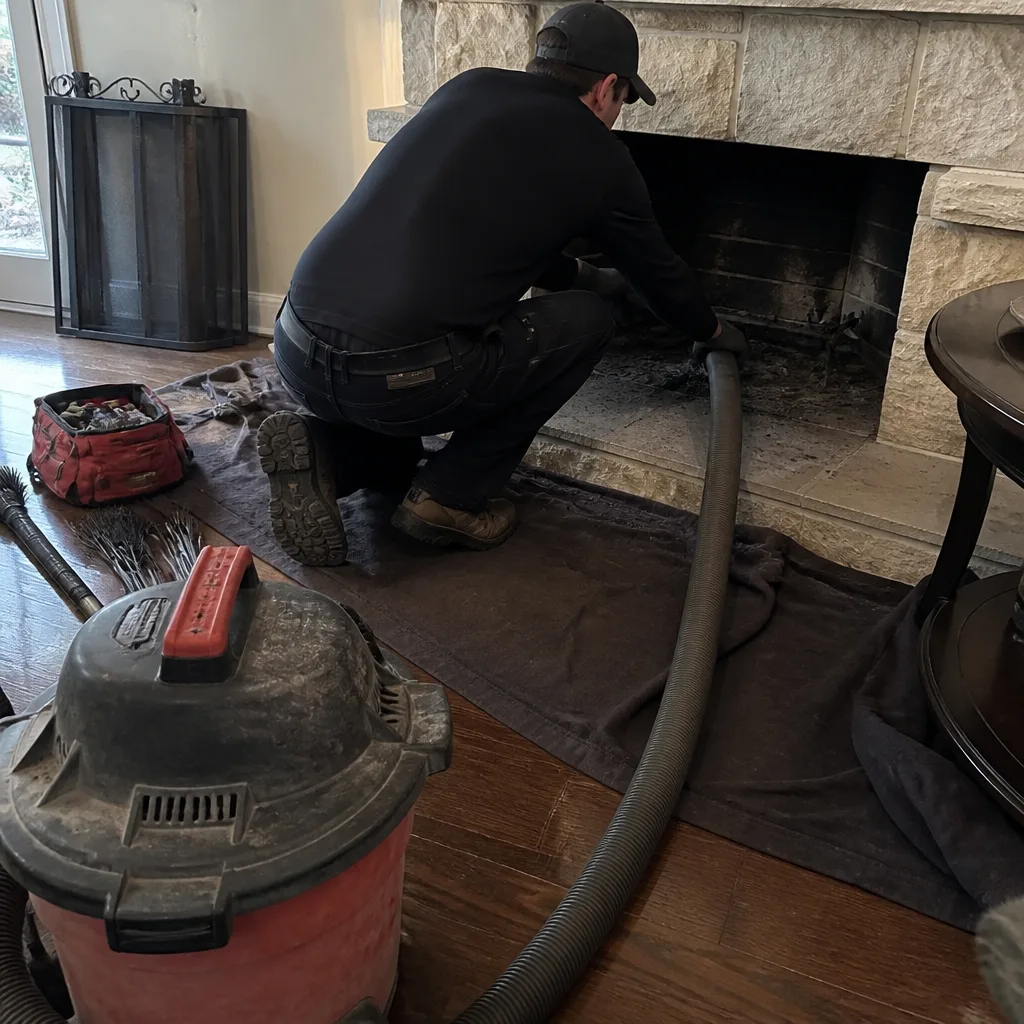
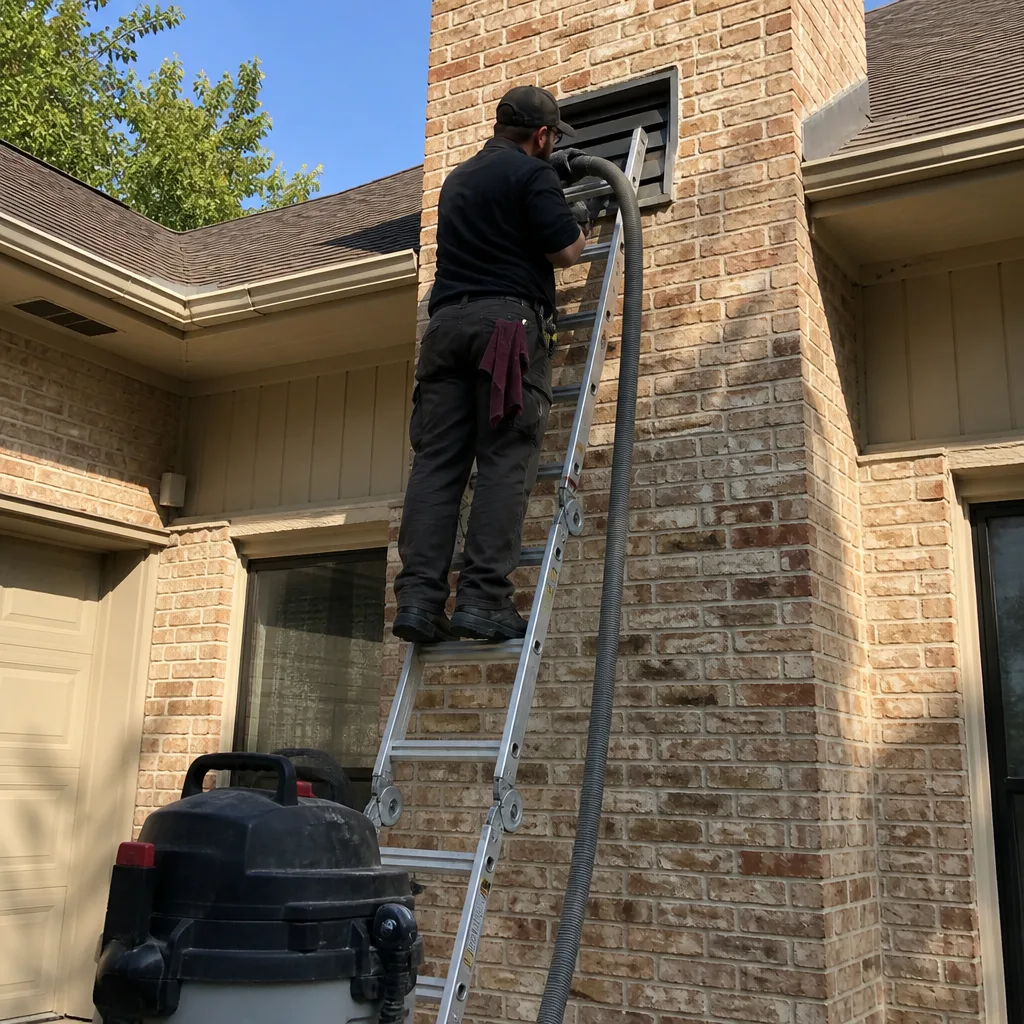
First, protection goes down. Tarps or drop cloths cover the hearth and the floor around the fireplace. A high-powered vacuum with a HEPA filter runs continuously from that point forward, so dust does not travel through your living room. Then the technician inspects the firebox and damper visually before touching anything, noting cracks, rust, or gaps that the sweep itself will not fix.
The sweep itself is done from below, from above, or both depending on the roof line and flue design. The technician uses wire or poly brushes sized to your flue, running them up and down the full length of the liner. In Dallas flues with baked-on creosote, they may also deploy a rotary loop system, a drill-powered whip that spins against the flue walls to break up glaze. Once the brushing is done, the technician vacuums out the firebox, removes the creosote and soot, and checks the smoke shelf and damper housing, areas where debris commonly collects.
After the sweep, the technician runs a visual check of the flue liner with a flashlight and mirror, or inserts a camera if anything looks questionable. You get a written report describing what was removed, what was found, and whether any repair is recommended. Nothing should be recommended without evidence you can see, whether that is a photo from the camera or the technician pointing to a crack in the firebox brick. Finally, the technician walks you through the chimney cap, flashing, crown, and exterior brick, because in Dallas, storm and heat damage often shows up outside first.
How Much Does Chimney Cleaning Cost in Dallas?
Chimney cleaning prices in Dallas run a fairly consistent range, but the range widens depending on the condition of the flue and the type of fireplace. A standard wood-burning fireplace sweep runs $189 to $350. A gas log or gas fireplace service, which typically includes cleaning the burner, checking the ignition, and verifying venting, runs $149 to $250. A prefabricated or manufactured fireplace with a metal chimney tends to land on the lower end. A masonry chimney with heavy creosote glaze may land at the upper end or require a second visit if chemical treatment is needed first.
Here is what we quote for the Dallas market, plain numbers, no hidden add-ons:
- Wood-burning fireplace sweep and Level 1 inspection: $189 to $350
- Gas fireplace service and inspection: $149 to $250
- Wood stove chimney sweep: $225 to $375
- Rotary or chemical treatment for glazed creosote: $75 to $200 additional, depending on flue length
- Chimney cap replacement: $150 to $400 including the cap
- Flue liner repair (HeatShield or stainless steel): $1,200 to $4,500 depending on method and flue height
- Firebox repair and tuckpointing: $400 to $2,500 depending on extent
These numbers assume a single-flue, single-story chimney typical of homes in Richardson, Mesquite, Garland, and the older neighborhoods of East Dallas. Two-story homes in North Dallas may run slightly higher because of roof access and flue length. Anything quoted significantly below $189 for a wood-burning sweep should raise a question: what is not included? A sweep that costs $99 often turns into a $900 repair after the technician “discovers” damage that a legitimate inspector would have documented with photos. We will show you what we find and write the price down before any extra work happens.
Level 1, Level 2, Level 3: Which Inspection Do You Need in Dallas?
The CSIA framework defines three inspection levels. You do not need to memorize all three, but you should know which one applies to your situation so a contractor cannot sell you a level you don’t need, or skip one you do.
Level 1 is the visual, readily accessible inspection included with every basic sweep. The technician looks at the firebox, damper, visible flue, and exterior chimney. This is the right annual check when you burn regularly and nothing about the system has changed.
Level 2 adds a camera scan of the interior flue and video documentation. It is required by the National Fire Protection Association when you sell a home, when you’ve had a chimney fire, when a storm or earthquake may have damaged the structure, or when you’re changing fuel type. In Dallas specifically, we recommend a Level 2 after any major hail or tornado event, and after any foundation work. A camera inspection is the only way to see cracks in the clay liner that a mirror and flashlight miss.
Level 3 is rare and invasive. It means opening up a wall, ceiling, or chimney crown to access concealed areas. You only need this if a Level 2 reveals structural damage that cannot be evaluated from the outside, or after a catastrophic event like a house fire.
For most Dallas homeowners buying a house built before 1990, the answer is simple: get a Level 2 inspection. North Texas has had decades of soil movement, and older clay liners are often cracked. A $250 camera inspection beats discovering a $4,000 liner replacement your first winter. If you’re a current homeowner who sweeps annually and has no recent event, a Level 1 with your sweep is sufficient. If you skipped sweeping for three or more years, schedule a Level 2. Gaps in use mask problems, they do not prevent them.
How to Read a Written Estimate Line by Line
You should know what you are buying before you agree to it. A legitimate written estimate breaks down the job into named tasks with a price attached to each. A vague one-liner, “chimney cleaning and repair, $1,800,” tells you nothing and protects no one. Here is how to read a real estimate, item by item.
- The sweep itself. Look for a line that says “chimney sweep” or “flue cleaning” with a specific price. This is the base job. If there is no sweep line, the invoice is about something else and you should ask what you’re actually paying for.
- Inspection level. Confirm whether the quote includes a Level 1 or Level 2 inspection and what that inspection covers. A camera scan should be named explicitly if it is included.
- Repair recommendations with cause stated. Any repair line should name the defect, not just the fix. “Flue liner repair” tells you nothing. “Replace cracked 13×13 clay liner with HeatShield resurfacing, Level 2 camera confirmation attached” tells you the problem and the proposed solution.
- Materials by name. A company that uses proper trade materials will say so. We specify brands like DuraFlex, Olympia Chimney, HeatShield, and Gelco on repair quotes so you can verify what you’re paying for. A generic “new liner” with no brand and no specification is a red flag.
- Cleanup included. The estimate should state that the work area is protected and that all debris is removed. If cleanup is an extra line item, that is unusual for a professional company.
- Guarantee language. Does the quote say anything about what happens if the repair fails? Ours does. Under the Kingswell Guarantee, every repair we complete carries a written guarantee, and if the covered work fails within the guarantee period, we return and correct it at no charge. That is the 365-Day Done Right Promise, and it is in writing, not a handshake.
Read the bottom line against the line items. If the two don’t match, ask before you sign. A company that will not put its price and its promise in writing is a company you should not let near your chimney.
How Often Should You Sweep a Dallas Chimney?
The generic answer is once a year. The Dallas-specific answer depends on how much you burn, what you burn, and where your house sits. For a full schedule tailored to local conditions, see our Seasonal Chimney Cleaning Care for Dallas: Year-Round Homeowner’s Guide.
If you burn more than a cord of wood per season, sweep annually at minimum, and typically before the first fire of October. Dallas burns are often intermittent, a cold snap here and a cold snap there, not a continuous six-month season like Minnesota. Those stop-start fires produce creosote unevenly, especially if you burn pine or unseasoned oak bought at a roadside stand. Half-burned logs and smoldering fires are the creosote factories.
If you burn less than a cord, you can sometimes stretch to every 18 months, but only if you have a Level 1 inspection each year to catch moisture and masonry issues. The mistake people make in Dallas is assuming a fireplace used five times in January needs no attention. The clay soil under your home does not know how often you light a fire. Foundation movement and liner cracks happen on their own schedule.
Gas fireplaces have different rules. Gas produces no creosote, so the sweep is not about removing flammable buildup. It is about confirming the venting is clear, the burner is clean, and carbon monoxide is not spilling into the house. A gas fireplace should be serviced every two to three years at least, annually if it is your primary heat source. In Dallas, many homes use gas logs in a masonry chimney originally built for wood. That transition matters. The flue sizing and venting requirements are different, and an inspection should confirm the setup is safe.
The DIY Question: What You Can and Should Not Do Yourself
Here is the honest boundary. You can clean the firebox. You can vacuum out ash between burns, wipe down the glass doors, and inspect the visible brick for cracks. You can and should check your chimney cap from the ground with binoculars after a big Dallas hailstorm, looking for dents, tears, or missing mesh. You can replace a worn gasket on a wood stove door if the manufacturer’s instructions cover it.
What you should not do yourself is anything involving the flue interior, the roof, or the masonry crown. A chimney sweep at a Dallas home means working on a roof pitch that may be 8/12 or steeper, with a clay tile or metal termination, often in wind. The flue itself is an enclosed space that can hide cracks invisible from the top and bottom. A DIY brush kit from a big-box store removes loose soot, but it will not touch the glazed creosote our Dallas heat bakes onto flue walls, and it will not show you the crack in the liner that the camera sees. And if the chimney has not been swept in years, there may be a nest, a dead animal, or a collapsed flue tile farther down. None of that is a homeowner job.
Carbon monoxide is colorless, odorless, and heavier than air. A clogged or damaged flue can send it back into the house instead of out the top. If you have a gas furnace or water heater venting into the same chimney, the risk is not theoretical. The safest and cheapest approach is to have a professional sweep and inspect it, then do your own regular ash cleanup between visits. Let a trained technician handle the roof and the flue interior. That single decision prevents most of the serious incidents we see.
Common Mistakes to Avoid
- Assuming low use means no risk. In Dallas, a fireplace that burns five times a season can still have a cracked liner from soil movement, and that crack is a carbon monoxide and house fire risk regardless of how much you burn.
- Hiring the cheapest fall crew. Every October, out-of-state crews sweep through North Texas offering $79 cleanings. Many do fine work. Some disappear by January, and the expensive repair they quoted goes undone. Hire a company with a Dallas history and a written guarantee.
- Burning unseasoned wood. Green or wet wood smokes, smolders, and deposits creosote far faster than dry hardwood. In humid Dallas falls, wood stacked on the ground never seasons properly. Raise it, split it, and give it a year.
- Skipping the chimney cap. A home without a chimney cap invites rain, birds, squirrels, and raccoons. Every Dallas chimney we inspect without a cap has water damage, and water is what destroys mortar joints faster than any fire ever will.
- Accepting a verbal quote. If a technician quotes you $850 over the fireplace but the invoice arrives at $1,400, you have no leverage. Get the price in writing before work starts. At Ashby Chimney Dallas, that is our policy on every job, no exceptions.
- Treating a Level 1 inspection like a full structural review. A Level 1 does not include a camera scan. It will not catch the cracked liner inside the flue. If you’ve owned the home for years and never had a camera inspection, the liner is an unknown.
- Burning pine and construction scraps. Pine is not automatically bad wood, but it burns hot and fast and deposits resin-based creosote. Construction lumber often contains chemicals and nails. Burn only seasoned hardwood.
When to Call a Professional
You need a professional chimney sweep in Dallas if any of these apply: it has been more than two years since your last sweep, you see black shiny creosote or soot falling into the firebox, you smell a campfire odor inside the house on warm days, your damper is stuck or missing, you hear water dripping in the flue after a rain, you see cracks in the firebox brick, or you’re buying or selling a home. These are not cosmetic issues. They are structural and safety conditions that a brush and vacuum will not resolve. Ashby Chimney Dallas offers free estimates throughout the Dallas metro, and we will tell you plainly whether a sweep is all you need or whether there is a repair worth addressing. Call (361) 314-3193 to get on the schedule.
Frequently Asked Questions
Most chimney cleanings in Dallas run between $189 and $350 for a wood-burning fireplace, with gas fireplace service from $149 to $250. Rotating or chemical treatment for glazed creosote adds $75 to $200 depending on flue length. Call (361) 314-3193 for a written quote exact to your home.
You need cleaning if you see soot or shiny black creosote in the flue, smell smoke when the fireplace is cold, or have burned a cord or more of wood since the last sweep. You need repair if you see cracks in the firebox, water in the flue, or a rusted damper. A camera inspection answers this definitively.
Yes, but not for the reason you think. The sweep removes flammable creosote, but the more important part in Dallas is the inspection. Foundation movement on Dallas clay soil cracks flue liners and fireboxes even in fireplaces that sit cold, and the only way to confirm the chimney is safe to use is to have a professional look at it. Next time you light a fire, the chimney should already have been checked.
A standard chimney sweep in a single-family Dallas home takes 60 to 90 minutes, including setup, sweep, inspection, and cleanup. If a camera inspection or rotary cleaning is added, allow two hours. We protect the hearth and floor with tarps and run a HEPA vacuum throughout, so the house is left clean.
You need a Level 2 inspection if you’re buying or selling a home, if you’ve had a chimney fire, if a major hailstorm or tornado has passed through, if you’ve had foundation work done, or if you’re switching from wood to gas. It includes a camera scan of the flue interior, the only way to see cracks in the clay liner. In Dallas, where clay soil movement is a constant, we recommend a Level 2 at least once for every home built before 2000.
You can remove loose ash and clean the firebox yourself, but the flue interior and rooftop work should be left to a professional. Big-box brush kits do not remove the glazed creosote Dallas heat produces, and they do not reveal cracked liners or blockages. Climbing a Dallas roof to sweep a flue is dangerous work; let a trained, insured technician handle it.
The Bottom Line
A clean chimney in Dallas is not about appearances. It is about making sure a structure that sits on shifting clay, bakes in hundred-degree heat, and burns whatever wood you fed it last January will still vent safely when you light the first October fire. Sweep it once a year if you burn regularly. Inspect it with a camera at least once, after any storm or foundation event, and before any home purchase. Get the price in writing, read the line items, and ask what the guarantee covers. If a company will not put its promise on paper, hire the one that will. If you’re in Dallas and need a sweep, an inspection, or an honest answer about whether a repair can wait, call Ashby Chimney Dallas at (361) 314-3193.
Written by Nathan Corliss, Owner at Ashby Chimney Dallas, serving Dallas since 2002.
See the difference
 Before
 After
After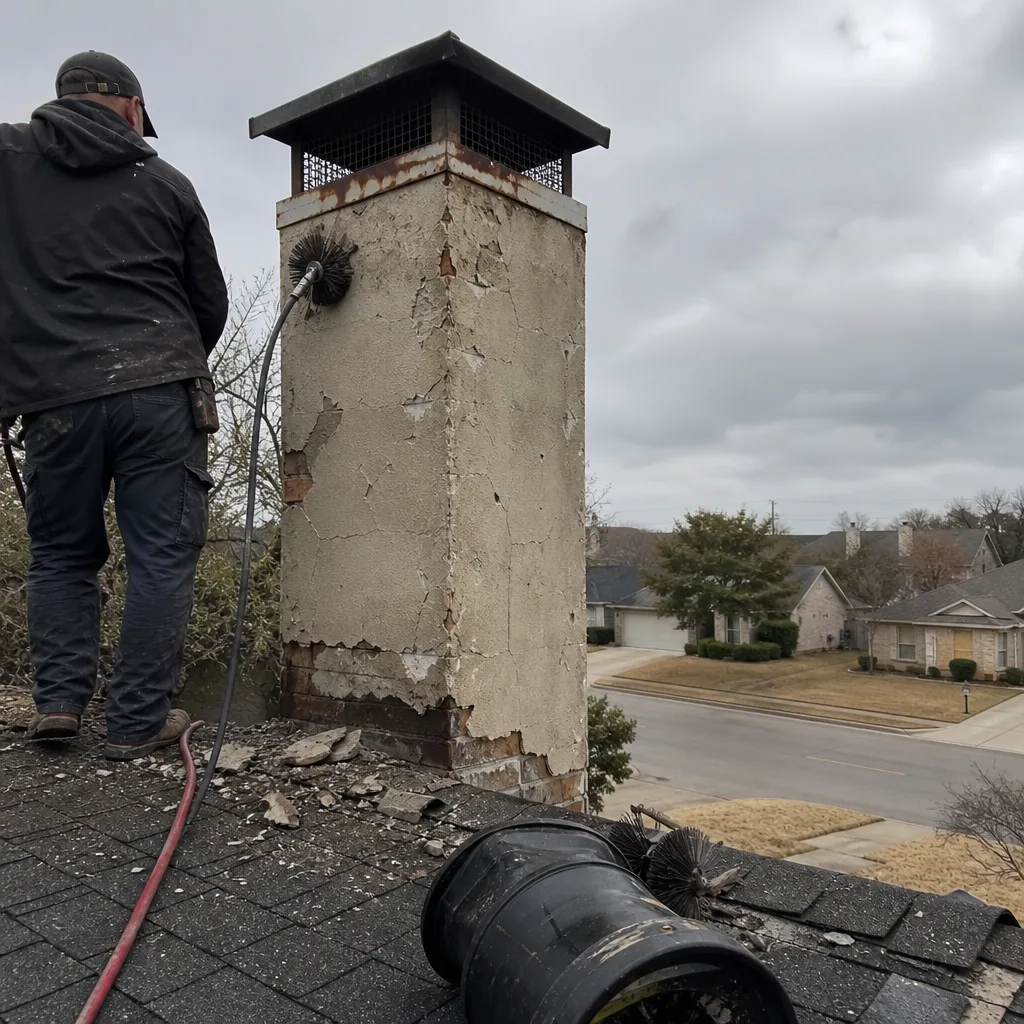 Before
 After
After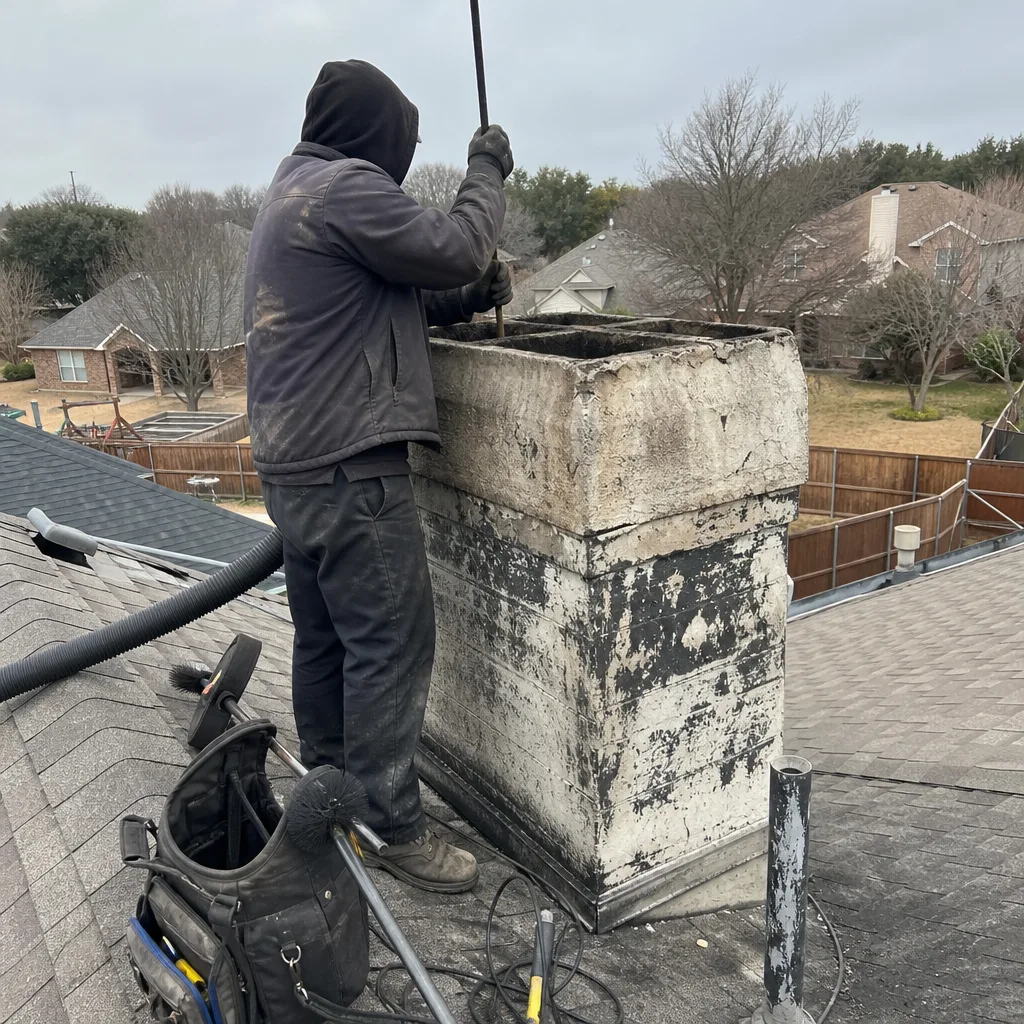 Before
 After
After